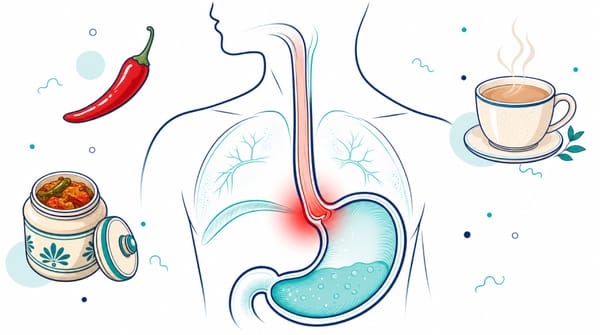
Air Pollution and Your Lungs: What Living in Indian Cities Is Actually Doing to Your Health
Six of the world's ten most polluted cities are in India. PM2.5 is now driving lung cancer in non-smokers. What the 2024 IQAir, Lancet, and AIIMS evidence actually says.
Note: This article is for informational purposes only. If you have persistent respiratory symptoms, consult a doctor. Do not self-diagnose based on this content.
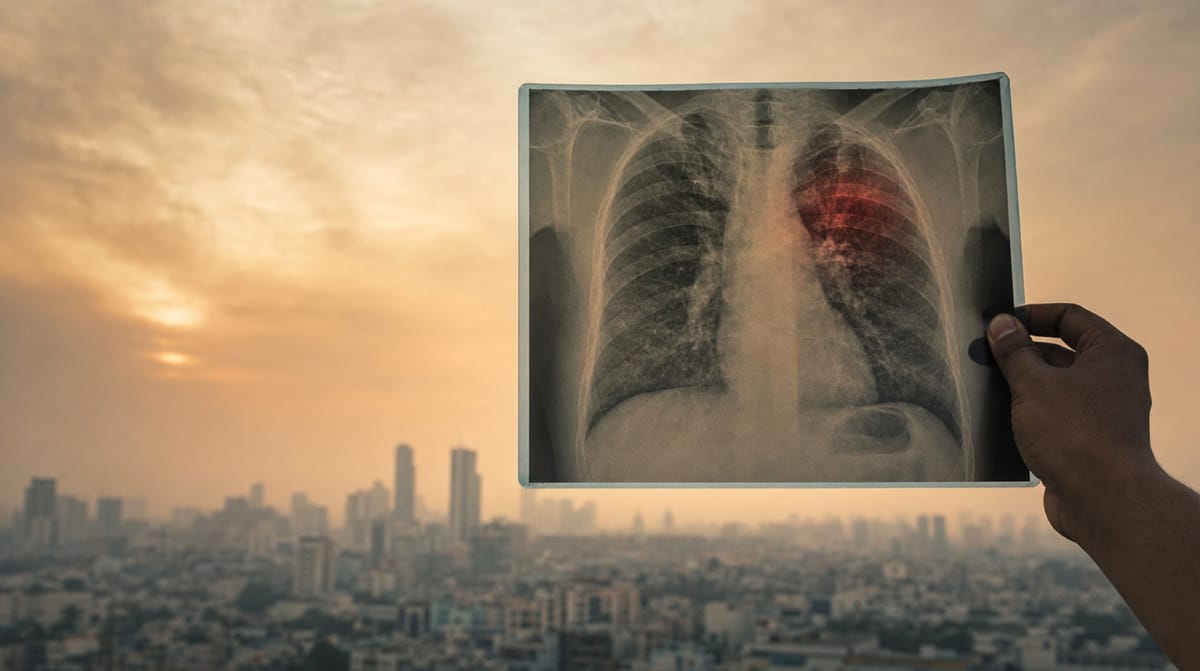
In 2024, six of the world's ten most polluted cities were in India. Byrnihat, on the Assam-Meghalaya border, recorded the highest PM2.5 concentration of any city on earth: 128.2 micrograms per cubic metre, twenty-five times the WHO safe limit of 5 µg/m³. New Delhi, at 91.6 µg/m³, was the most polluted capital city globally for the second year running. India's national annual PM2.5 average was 50.6 µg/m³, more than ten times the WHO guideline, placing it fifth among the most polluted countries worldwide, according to the IQAir World Air Quality Report 2024. A Lancet Planetary Health analysis found that prolonged PM2.5 exposure in India is linked to 1.5 million deaths annually between 2009 and 2019 and a reduction in average life expectancy of 5.2 years.
These are not warnings about future risk. They are descriptions of what is happening now. And the health consequence that most coverage misses is this: India's air pollution is no longer primarily a respiratory irritant. It is driving lung cancer in people who have never smoked.
India's PM2.5 crisis is now the primary driver of lung cancer in non-smokers, who account for 40 to 50% of all Indian lung cancer patients. The mechanism is not smoke entering the airways but PM2.5 particles entering the bloodstream, and the research from AIIMS, the Lancet, and ICMR collectively makes clear that this is a population-level emergency, not an individual health concern. This guide covers what the 2024 and 2025 evidence actually says, using named primary sources, and what it means for anyone living and breathing in an Indian city.
SwasthiQ covers India's public health and preventive health landscape so Indian families and clinic owners can make evidence-based decisions.
Official sources: IQAir World Air Quality Report 2024 | Lancet Planetary Health: India PM2.5 mortality study | Noronha et al., Lancet Regional Health SEA, July 2024 | AIIMS AIRCARE study, March 2026
What PM2.5 Is and Why It Is Different From Every Other Air Pollutant
Air pollution is a broad category containing dozens of pollutants. What makes PM2.5 uniquely dangerous is a matter of scale. PM2.5 refers to particulate matter with a diameter of 2.5 micrometres or less, roughly 3% the width of a human hair. At this size, the particles are too small to be filtered by the nose, the throat, or the upper airways. They travel directly into the alveoli (the tiny air sacs deep in the lungs where oxygen and carbon dioxide exchange takes place), where they can cross the lung wall and enter the bloodstream. Once in the bloodstream, PM2.5 is carried to the heart, the brain, and other organs, far from the lungs where it was inhaled.
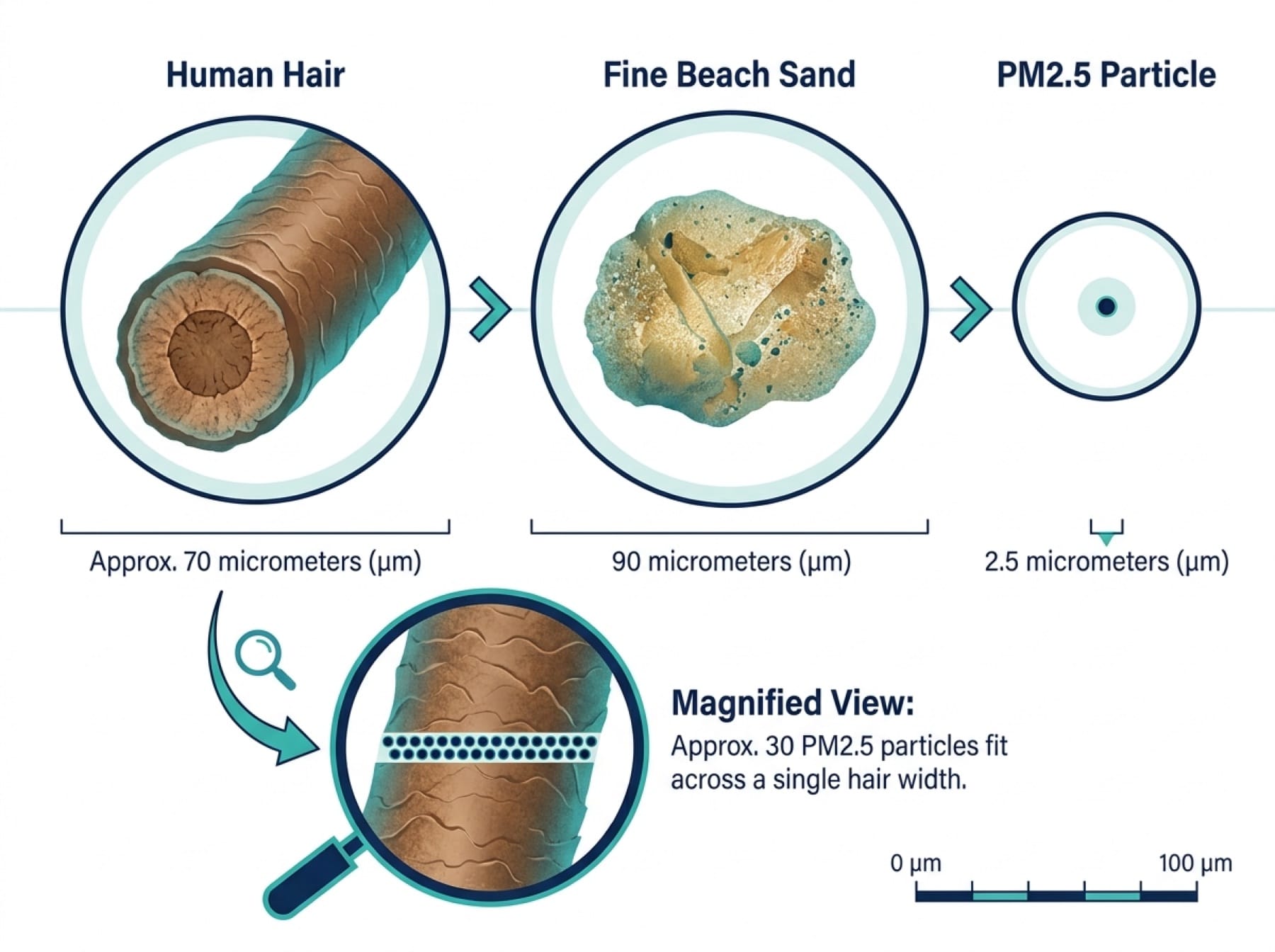
Scale comparison showing a PM2.5 particle beside a human hair strand and sand grain
This is what separates PM2.5 from dust, smoke, or larger particulates. Larger particles cause irritation in the nose and throat and are mostly expelled through normal clearance mechanisms. PM2.5 bypasses those mechanisms entirely. The WHO considers PM2.5 the air pollutant that poses the greatest risk to human health. In India, the sources of PM2.5 are layered: vehicle exhaust, industrial emissions, construction dust, biomass burning, and in northern India, agricultural stubble burning that the IQAir 2024 report found contributes up to 60% of PM2.5 levels in peak season.
India's PM2.5 levels are not in the zone of "unhealthy for sensitive groups." They are, in much of the country and for much of the year, at levels the WHO classifies as seriously hazardous for everyone. A 7% improvement in India's national PM2.5 average from 2023 to 2024 (54.4 to 50.6 µg/m³) is genuine progress. It is also ten times the WHO limit.
India's Air Quality in 2024: The Named Numbers
The IQAir World Air Quality Report 2024, which compiles PM2.5 data from over 40,000 monitoring stations across 138 countries, provides the most comprehensive annual snapshot of India's air quality. Its findings for India in 2024 are as follows.
India ranked fifth among the most polluted countries globally, with a population-weighted annual PM2.5 average of 50.6 µg/m³. Six of the world's ten most polluted cities and 13 of the top 20 were in India. Byrnihat, at the Assam-Meghalaya border, recorded 128.2 µg/m³, the highest PM2.5 of any metropolitan area on earth. New Delhi recorded 91.6 µg/m³, retaining its position as the most polluted capital city globally. Other severely polluted Indian cities in the 2024 rankings included Mullanpur (Punjab), Gurugram, Faridabad, Bhiwadi, and Noida. Thirty-five per cent of Indian cities exceeded the WHO PM2.5 annual guideline.
To put these numbers in physiological context: a person in Byrnihat breathing outside air is inhaling PM2.5 equivalent to roughly 5 to 6 cigarettes' worth of particulate exposure per day, calculated using the Berkeley Earth PM2.5-to-cigarette conversion published by Muller and Rosen (Berkeley Earth, 2015, on air pollution equivalence to cigarette smoking). The person is not smoking. The particles arrive in their bloodstream through the same mechanism regardless.
What PM2.5 Does Inside the Body: The Mechanism
Understanding why PM2.5 is dangerous requires understanding what happens after inhalation at the cellular level. This is not disputed by any credible scientific body. The debate is about the magnitude of harm, not its existence.
When PM2.5 particles reach the alveoli, three things happen. First, the particles trigger a local inflammatory response. The body treats them as foreign invaders and deploys immune cells that produce inflammatory chemicals. Chronic exposure means chronic inflammation, and chronic inflammation is both a driver of lung disease and a precursor to cellular mutations that can lead to cancer. Second, particles that are small enough cross the alveolar membrane and enter the bloodstream, where they can deposit in blood vessels, the heart, and the brain. Third, PM2.5 carries chemical compounds adsorbed onto its surface, including polycyclic aromatic hydrocarbons and heavy metals, which are themselves carcinogenic and mutagenic.
The Lancet Planetary Health analysis found that sustained exposure to PM2.5 at Indian concentration levels shortens life expectancy by an average of 5.2 years nationally and was linked to approximately 1.5 million deaths annually between 2009 and 2019. Air pollution globally was associated with 8.1 million deaths in 2021, with 58% of those attributable specifically to ambient PM2.5, according to IQAir's 2024 report citing WHO and Global Burden of Disease data. India's share of this global burden is, given its PM2.5 levels and population size, substantial.
The Non-Smoker Lung Cancer Crisis: India's Most Undercovered Health Story
The signal that Indian oncologists have been raising for several years, and that national coverage has underreported, is this: lung cancer in India is increasingly a disease of people who have never smoked.
A comprehensive review published by Noronha et al. in Lancet Regional Health Southeast Asia in July 2024 compiled the available data on lung cancer in the Southeast Asian region, with a specific focus on India. Its findings are striking. Between 40 and 50% of lung cancer patients in India, across multiple studies, are never-smokers. Among South Asian women with lung cancer, 83% are never-smokers. The review found that lung cancer in India manifests approximately ten years earlier than in Western populations, suggesting that the causative exposure, most plausibly PM2.5, begins earlier or accumulates faster.
A separate study published in the Indian Journal of Medical Research (PMC11801781, 2024) found that in a large North Indian cohort, 44% of new lung cancers occurred in non-smokers. This is not a marginal finding in a small study. It is a pattern replicated across multiple Indian research centres. An AIIMS Bhubaneswar case-control study published in PMC10991854 in 2024, conducted with 145 lung cancer patients who were non-smokers, found that 92.4% had adenocarcinoma (the histological type most strongly associated with air pollution exposure rather than tobacco).
AIIMS Delhi launched its AIRCARE (Air Pollution and Cancer Research Ecosystem) study in March 2026, the first multi-year India-specific study designed to establish a causal pathway between PM2.5 exposure and lung cancer in non-smokers. The study, led by Dr. Sunil Kumar, Professor and Head of Surgical Oncology, is tracking patient profiles, PM2.5 exposure histories, and genetic biomarkers across Delhi-NCR. Dr. Kumar's statement in connection with the study's launch is worth quoting directly: "Lung cancer is no longer confined to tobacco users. It is deeply concerning that a disease once strongly associated with smoking is now rising rapidly among non-smokers."
The ICMR has projected India's lung cancer case burden to rise from 63,708 cases in 2015 to over 81,000 by 2025. A growing fraction of this increase is occurring in the never-smoking population, and the most consistently identified driver is ambient PM2.5.
Beyond the Lungs: What PM2.5 Does to the Cardiovascular System and Brain
The clinical picture of PM2.5 exposure extends well beyond pulmonary disease, and the Indian evidence base on these broader harms is accumulating. The mechanism remains the same one introduced earlier: PM2.5 crosses from the lungs into the bloodstream, and from the bloodstream into every organ blood reaches. Because PM2.5 enters the bloodstream, it deposits in arterial walls, promoting the inflammatory processes that underlie atherosclerosis (the build-up of plaque in arteries). Long-term exposure at Indian PM2.5 levels is associated with elevated cardiovascular disease risk, including heart attack and stroke, through this mechanism.
The brain is also not protected. PM2.5 particles are now documented to cross the blood-brain barrier (the protective membrane that filters substances in the blood from reaching brain tissue). Research links long-term PM2.5 exposure to accelerated cognitive decline, increased dementia risk, and adverse neurodevelopmental outcomes in children exposed during early life. For India, where children in Delhi spend formative developmental years breathing air at 91.6 µg/m³, these developmental consequences are not hypothetical future risks.
Reproductive and pregnancy outcomes are also affected. Elevated ambient PM2.5 has been associated with preterm birth, low birth weight, and congenital abnormalities in exposed populations. Indian cities' pollution levels place pregnant women and developing foetuses in a zone of documented risk that India's public health framework has not yet fully acknowledged. (For more on how environmental compounds enter the bloodstream, see our guide on microplastics in India's blood and food, which describes the same bloodstream-entry mechanism for a different class of environmental pollutant.)
Delhi and the Indo-Gangetic Plain: Why Geography Makes It Worse
India's worst air quality is concentrated in the Indo-Gangetic Plain, which spans Punjab, Haryana, Delhi, Uttar Pradesh, and Bihar. This geography is not accidental. The plain is bounded to the north by the Himalayan ranges and to the south by the Deccan Plateau, creating a bowl-shaped basin where cold air sinks during winter months, trapping pollutants close to the ground. When winter temperature inversions (a weather condition in which a layer of warm air traps cooler, pollution-laden air below it) coincide with peak stubble-burning season in October and November, Delhi's AQI regularly enters the 400 to 500 range, and PM2.5 concentrations spike to ten to twenty times the WHO limit in a single day.
The IQAir 2024 report identified northern India's agricultural stubble burning as contributing up to 60% of PM2.5 during peak season. This is a specific, named, dated finding, not a generic reference to "seasonal factors." The practice is an economic necessity for the farmers involved, not a careless habit, and addressing it requires both agricultural policy reform and economic support for alternative stubble management. The health cost of the current approach falls not on the farmers but on the urban populations downwind.
Delhi's annual PM2.5 of 91.6 µg/m³ in 2024 represents a 7% improvement from 2023. This improvement is real but insufficient. At 91.6 µg/m³, Delhi's air is eighteen times the WHO annual guideline. At this level, an otherwise healthy adult living in Delhi has been shown to face meaningfully elevated long-term risks of lung disease, cardiovascular disease, and, as the Lancet evidence now indicates, lung cancer, without ever having smoked a cigarette.
Children and the Developing Lung: The Highest-Risk Population
The evidence on children and air pollution deserves separate, specific attention. A child's lungs are not simply a scaled-down version of an adult's. They are actively developing, with new alveoli forming through childhood and adolescence. Exposure to PM2.5 during lung development causes structural impairment that cannot be reversed. Children also breathe faster than adults relative to their body weight, increasing their per-kilogram PM2.5 intake.
IQAir's 2024 data show that South Asian children are growing up in air that no WHO standard considers safe for any population. In India's most polluted cities, children attending outdoor school activities during high-AQI days are receiving multi-hour exposures at PM2.5 concentrations between 100 and 400 µg/m³. The Lancet Planetary Health analysis includes children in its mortality and morbidity burden estimates. The WHO identifies air pollution as the second leading cause of death among children under five globally, after malnutrition.
What You Can Do: Practical India-Specific Guidance
Individual action cannot eliminate India's air pollution problem, which requires policy change at the level of vehicle emissions standards, industrial regulation, agricultural reform, and urban planning. But individual protective actions can meaningfully reduce personal PM2.5 exposure at the margins. The following are evidence-supported and India-specific.
Track daily AQI through the SAMEER app (India's official real-time AQI platform) or IQAir's app before planning outdoor activity. The most important high-exposure periods in northern India are October to January. During "very poor" (AQI 301 to 400) or "severe" (AQI above 400) days, outdoor exercise significantly increases lung deposition of PM2.5 because elevated breathing rate pulls particles deeper into the respiratory tract.
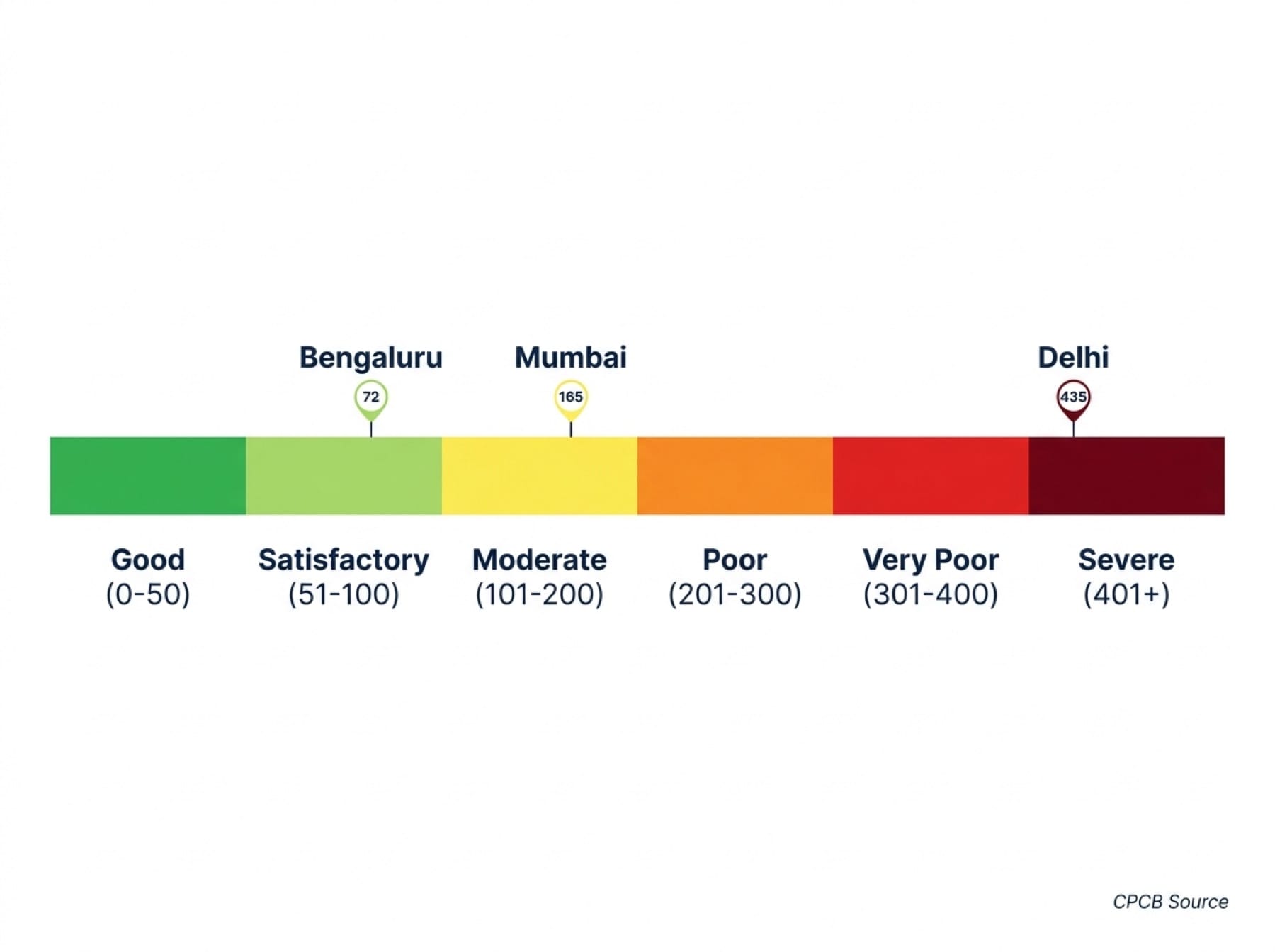
Air Quality Index color scale from Good to Severe with Indian city markers
Use a well-fitted N95 or equivalent mask during outdoor exposure on high-pollution days. Surgical masks do not filter PM2.5 effectively. N95 respirators, worn correctly without facial hair gaps, provide 95% filtration of PM2.5. This is a meaningful reduction, not a marginal one.
Improve indoor air quality with a HEPA air purifier (a device that filters particles including PM2.5 through a high-efficiency filter) in sleeping and living spaces. Indoor PM2.5 in Indian homes, particularly those using gas or solid-fuel cooking, is itself a significant exposure source. A quality air purifier reduces but does not eliminate indoor PM2.5.
Discuss lung function testing with your doctor if you live in a highly polluted area and have had respiratory symptoms for more than two to four weeks. A spirometry test (a simple breathing test that measures lung capacity and airflow) can detect reduced lung function before symptoms become severe enough to be disabling.
Respiratory infections are harder to clear in people with polluted-air-damaged lungs. India's antimicrobial resistance crisis compounds this: infections that might have been cleared with standard antibiotics are increasingly drug-resistant. The pollution-AMR interaction is underresearched but clinically relevant. (See our guide: India's antimicrobial resistance crisis.)
The Bottom Line
India had six of the world's ten most polluted cities in 2024. Its most polluted capital city recorded annual PM2.5 of 91.6 µg/m³. The Lancet links this exposure to 1.5 million Indian deaths annually and a national life expectancy reduction of 5.2 years. And 40 to 50% of Indian lung cancer patients have never smoked, because PM2.5 enters the bloodstream and causes the same cellular damage as tobacco, without the cigarette.
These are not general warnings or predictions. They are named, dated findings from IQAir, the Lancet, AIIMS, and ICMR. India's air pollution is a present-tense public health emergency, measurable at the city level, the street level, and the cellular level. The question is not whether it is harmful. The evidence has resolved that. The question is whether India's healthcare system, policymakers, and individuals will respond in proportion to what the science now clearly describes.
Stay informed on air quality and public health in India
SwasthiQ tracks India's environmental health evidence, from PM2.5 research to FSSAI food safety updates. Subscribe to our monthly newsletter for evidence-based public health coverage relevant to Indian urban life.
Think Care · Think SwasthiQ
Related reading: Microplastics in India's blood and food: what the science says | India's antimicrobial resistance crisis: why your antibiotics may stop working