Microplastics Health Effects in India: What the Science Actually Says About Microplastics in Our Blood
Microplastics found in India's salt, sugar, air, and blood. Named studies from Leslie 2022, Scientific Reports 2024, IITRM Pune, IISc, IIT Madras, plus FSSAI's 2024 national project, explained.
Note: This article is for informational purposes only. Consult a doctor before making changes to your diet, lifestyle, or health routine based on this content.
A study by Toxics Link, an Indian environmental research organisation, tested 10 types of salt and 5 types of sugar from markets across India in 2024. Every single brand tested, packaged or unpackaged, contained microplastics. Around the same time, FSSAI launched a national project to measure microplastic exposure levels in Indian food, an acknowledgement that the problem is real, present, and insufficiently mapped. (PIB, August 2024)
These particles have also been found in human blood. In the landmark 2022 study by Leslie et al., published in Environment International, microplastics were detected in 77% of blood samples from 22 healthy adult donors, the first time plastics had ever been confirmed in the human bloodstream. A 2024 follow-up in Scientific Reports found particles in 88.9% of 36 subjects, with a mean concentration of 4.2 particles per millilitre.
Microplastics are in India's food, salt, air, and blood. That is established. What is not yet established is the clinical threshold at which this becomes harmful, and whether current real-world exposure levels cross it. This article maps what the science has confirmed, where it still has gaps, and what is practically actionable for Indian households today.
SwasthiQ covers India's health data and health research landscape so Indian families and clinic owners stay informed about emerging evidence that affects daily health decisions. This article draws on named peer-reviewed studies and government sources.
Official sources: Leslie et al. 2022 | Scientific Reports 2024 | Cox et al. 2019 | IITRM / Scientific Reports 2025 | FSSAI / PIB 2024
What Microplastics Are and How They Enter Our Bodies
Microplastics are plastic particles smaller than 5 mm. They come from larger plastic objects that break down over time: bags, bottles, packaging, and synthetic textiles. They also come from microbeads in personal care products and from industrial emissions. Researchers now find them in nearly every environment on Earth, from deep ocean sediment to Himalayan snow. What makes them different from other contaminants is scale. Plastic has been mass-produced since the 1950s. Its breakdown bits are now in the global food chain, the water cycle, and the air we breathe. There is currently no environment that has been studied and found to be plastic-free.
Three routes account for most human exposure:
- Ingestion: through food, drinking water, salt, seafood, and packaged products. An average person is estimated to consume over 50,000 microplastic particles per year from food alone; for regular bottled water drinkers, estimates reach 90,000 annually. (Source: Cox et al., Environmental Science and Technology, 2019)
- Inhalation: airborne plastic fibres and fragments in urban air. A 2025 study by researchers at the Indian Institute of Tropical Meteorology, published in Scientific Reports, found an average of 1.87 microplastic particles per cubic metre in Delhi's PM10 (particulate matter 10 micrometres or smaller, the inhalable dust fraction tracked by air quality regulators) during winter. PET (polyethylene terephthalate, the plastic used in drink bottles) and polyethylene were the dominant types. (Source: IITRM / Scientific Reports, 2025)
- Dermal contact: a minor route, primarily relevant for occupational exposure.
In India, high single-use plastic consumption, informal recycling, open waste burning, and dense urban air pollution create a particularly high ambient exposure environment, across both food chains and the air people breathe.
What the Blood Detection Studies Actually Found
The science of microplastics in human blood has moved quickly since 2022. Here is what the key studies established, and where the limits of that evidence sit.
The 2022 Leslie et al. study: the first confirmed detection
Researchers led by Heather Leslie at Vrije Universiteit Amsterdam tested blood from 22 healthy adults. They found microplastics in 17 of them, a 77% detection rate. The most common type was PET (polyethylene terephthalate, the plastic used in drink bottles). PET was found in 50% of samples. Polystyrene and polyethylene also showed up.
The sample size was small and the study was not designed to measure health effects. Leslie et al. stated explicitly that presence does not equal harm and further research was urgently needed. (Source: Environment International, 2022)
The 2024 Scientific Reports coagulation study
A 2024 study in Scientific Reports tested 36 healthy adults. It found microplastics in 88.9% of blood samples. The average was 4.2 particles per millilitre. Polystyrene (a hard plastic used in disposable cutlery and packaging) and polypropylene (used in food containers and yogurt cups) were the dominant types.
This study went further than Leslie et al. It looked at coagulation markers (the proteins in blood that control clotting) alongside microplastic detection. The authors found that altered clotting markers tracked with microplastic presence.
These are associations, not proven causal links. They do, however, represent the first signal in human subjects of a potential physiological effect. (Source: Scientific Reports, 2024)
What the detection data means and does not mean
Detection does not equal harm. Both studies confirmed presence; neither established causation with disease. The medical community is clear: we know microplastics are in human blood; we do not yet know at what concentrations they become clinically harmful, or whether they do at all.
What Happens After Microplastics Enter the Blood?
Blood is a transport system. If plastic particles are circulating in it, the question is where they go and what they do when they get there.
Lab studies, mostly on animal models and cultured cells, have documented several potential mechanisms:
- Microplastics can trigger inflammatory responses in immune cells.
- They cause oxidative stress, an imbalance between free radicals and the body's antioxidant defences.
- They have been found in human lung tissue and placenta, indicating that ingested or inhaled particles do not stay confined to the gut or respiratory tract.
- Indian researchers at IISc Bangalore reported a 2024 study showing that zebrafish larvae exposed to polyisobutylene (a type of plastic used in chewing gum, sealants, and tyres) microplastics showed delayed hatching, impaired swimming, and altered gene expression at concentrations relevant to environmental exposure. (Source: IISc / IDR, 2024)
The honest scientific position: in human subjects, causal links between microplastics in the blood and specific diseases have not been established. The 2024 coagulation study is the first signal of a possible physiological effect in humans. Long-term, large-scale epidemiological studies are in progress but have not yet reported.
The Chemical Load: Why the Particles Are Only Part of the Problem
Microplastics are not chemically inert. They carry two kinds of concern beyond the particle itself.
The first is additive chemicals. These are compounds added to plastics during manufacturing. BPA (Bisphenol A) and phthalates are the most studied. Both are endocrine disruptors (substances that mimic hormones and interfere with the body's hormone signals). Scientific studies link BPA to fertility problems, Type 2 diabetes, and cardiovascular disease. BPA is in food packaging and reusable plastic containers that are common across India.
The second is adsorbed contaminants. Heavy metals, pesticide residues, and other long-lasting pollutants stick to the surface of microplastic particles in soil and water. They then travel with the particles into the body.
The implication: even if microplastic particles themselves turn out to be biologically tolerable at current exposure levels, the chemical cargo they carry may not be. BPA-free labelling alone does not fully resolve the concern; replacement plasticisers are not uniformly proven safe. (See: natural vs chemical health myths in India)
Microplastics Health Effects in India: A Higher Exposure Environment
Several factors converge to make microplastic exposure in India structurally higher than in many other countries.
Food chain contamination
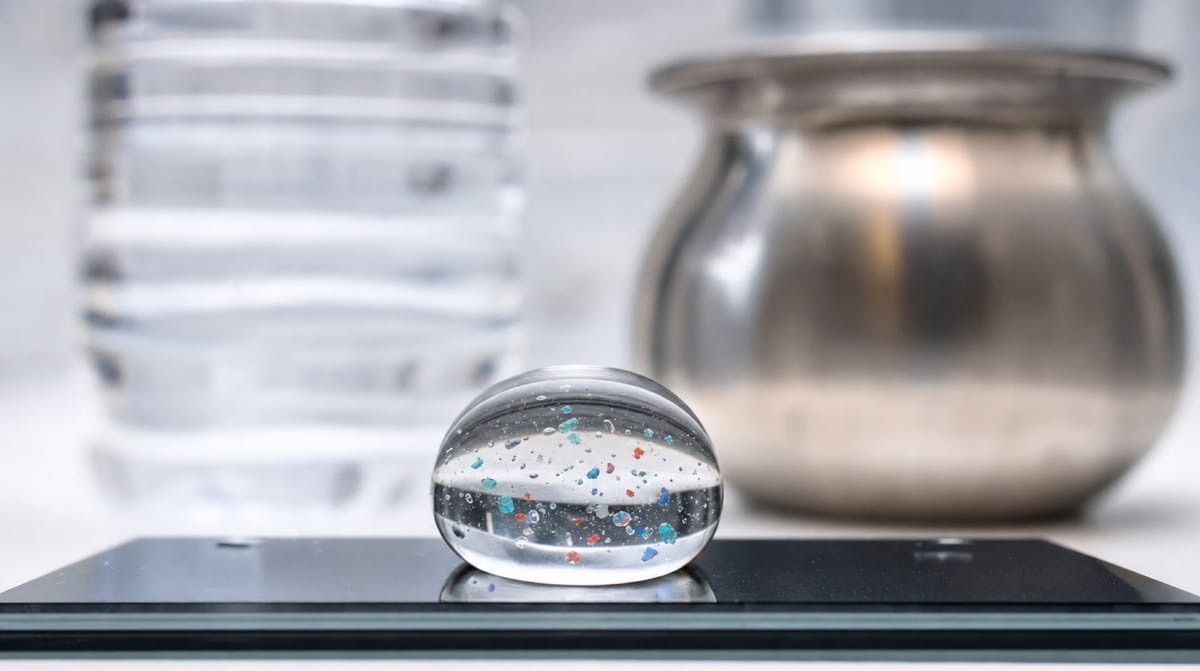
The 2024 Toxics Link study found microplastics in every tested category of salt: table salt, rock salt, sea salt, and local raw salt, with concentrations ranging from 6.71 to 89.15 particles per kilogram of dry weight. Iodized salt showed the highest concentrations. All five sugar types tested were also positive.
FSSAI has since launched a national project, in collaboration with CSIR-IITR Lucknow, ICAR-CIFT Kochi, and BITS Pilani, to generate India-specific data and guide regulatory action. (Source: FSSAI PIB, August 2024)
Airborne microplastics in Indian cities
The first comprehensive study of airborne microplastics in Delhi, conducted by IITRM Pune and Savitribai Phule Pune University and published in Scientific Reports in 2025, found an average of 1.87 microplastic particles per cubic metre in PM10 (the inhalable particulate fraction) during winter, with PET and PE as the dominant polymers.
Delhi's exposure environment is driven by industrial emissions, construction debris, synthetic textile microfibres from dense urban populations, and open waste burning. Each factor independently contributes to elevated atmospheric microplastic concentrations. (Source: Scientific Reports, 2025)
Indoor sources: an IIT Madras finding
A 2023 review by IIT Madras researchers, published in Environmental Science and Pollution Research, identified residential buildings themselves as a major microplastic source, from synthetic carpets, furniture, and air conditioning filters. Most Indians spend the majority of their day indoors under the assumption that indoor air is cleaner than outdoor air. The evidence suggests it may not be.
What the Science Still Needs to Answer
The pace of microplastic research has accelerated significantly since 2022, but several critical questions remain unanswered:
- At what blood concentration do microplastics, if ever, become clinically harmful?
- Do particles accumulate in specific organs over time, or are they cleared?
- How do microplastic exposures interact with India's existing burden of air pollution, pesticide residues, and heavy metal contamination?
- What are the long-term effects of lifetime, low-dose exposure that begins in utero (in the womb, before birth)?
Large-scale human epidemiological studies (long-term population studies that track health outcomes across thousands of people) are underway globally, but none have yet reported results at population scale. India's FSSAI project, expected to generate the first India-specific food exposure data, is a meaningful step toward filling this gap.
What You Can Practically Do: Evidence-Based Steps
Complete avoidance of microplastics is not currently achievable, and the science does not yet support dramatic lifestyle restructuring. The following measures reduce exposure meaningfully at low cost and without requiring significant behavioural disruption. They are grounded in the exposure routes identified by current research: food contact, bottled water, and indoor air. Applying all of them together likely reduces daily microplastic intake materially, even if precise dose reduction cannot yet be quantified. Think of these as a precautionary response proportionate to where the evidence currently sits, not a cure.
Reduce plastic in food contact
- Avoid heating food in plastic containers: heat accelerates leaching of BPA and phthalates.
- Prefer glass or stainless steel for food storage, particularly for acidic or hot foods.
- Reduce bottled water consumption; use filtered tap water where water quality permits.
- Limit packaged and ultra-processed food consumption: more packaging means more particle transfer.
Reduce indoor airborne exposure
- Ventilate rooms regularly, particularly in homes with synthetic carpets or new furniture.
- Use wet mopping over dry dusting: dry dusting resuspends settled fibres.
- Vacuum regularly with a HEPA-filter vacuum if available.
Stay calibrated on risk
The science is real but not fully settled. The precautionary steps above are sensible and low-cost. Large-scale behavioural changes based on current evidence are not warranted. What is warranted: supporting better food labelling, FSSAI regulation, and long-term research funding so that policy can catch up with the science.
The Bottom Line
Microplastics are in India's salt, sugar, air, and blood. That is established. What is not yet established is the clinical threshold at which this becomes harmful, and whether current real-world exposure levels cross it.
This is not a reason to panic. It is a reason to pay attention. India is at the centre of this issue: as one of the world's largest plastic consumers and waste generators, and as a country where regulatory frameworks for microplastics are still being built.
FSSAI's 2024 project, the IIT Madras and IISc research, and the Delhi NCR airborne study signal that Indian science is beginning to generate the country-specific evidence that policymakers need. The next two to three years of data will be decisive.
Stay informed on environmental and public health in India
SwasthiQ tracks India-specific evidence on microplastics, air pollution, FSSAI food safety, and preventive care. Subscribe to our monthly newsletter: evidence-based, no hype.
Think Care · Think SwasthiQ
Related reading: Air pollution and your lungs: what living in Indian cities is doing to your health | Natural vs chemical: busting the health myths that won't die | How to read food labels in India: FSSAI decoded