PCOS Symptoms in India: Why 1 in 5 Women Has It and Most Don't Know
PCOS affects up to 1 in 5 Indian women, but most are undiagnosed. Evidence-based guide: causes, symptoms, diagnosis, treatment, and diet for India.
Note: This article is for informational purposes only. PCOS diagnosis requires clinical evaluation. Consult a doctor before starting or changing any treatment.
A woman in her mid-twenties goes to a doctor complaining of irregular periods, weight gain she cannot explain, and acne that never quite cleared after her teens. She is told it is stress, or that she will "regulate" after marriage, or that her weight is the cause of all three problems. She is sent home without a blood test or an ultrasound. Five years later, she is diagnosed with polycystic ovary syndrome (PCOS). Her condition was not new; it was simply never looked for.
PCOS symptoms in India are commonly mistaken for stress, weight gain, or post-marriage "settling." This story is common enough in India that it is almost routine. A 2024 nationwide multicenter ICMR study by Ganie et al. (Endocrine Connections, 2024) of nearly 10,000 Indian women found that PCOS affects up to 19.6% of women of reproductive age using the Rotterdam criteria (the most widely used diagnostic standard), and a 2022 systematic review and meta-analysis of Indian studies by Bharali et al., published in Cureus, found a pooled prevalence of 11.33% across diagnostic criteria. On the most conservative estimate, approximately 1 in 9 Indian women of reproductive age has PCOS. On the most inclusive estimate, it is closer to 1 in 5.
PCOS is one of the most common hormonal disorders in Indian women, and most of them do not know they have it. This guide explains what PCOS is, why it is more common in India than the global average, how it is diagnosed, what it does to the body beyond the reproductive system, and what treatment and dietary approaches are supported by evidence.
India is building a connected healthcare ecosystem on shared digital rails (ABDM, FHIR R4), and women's health is one of the most under-resourced parts of it. PCOS sits in that gap: a condition affecting one in five Indian women that the system has not built a screening pathway for. SwasthiQ writes about India-specific women's health evidence so families can recognise patterns the system misses and ask their doctors the right questions.
Official sources: Bharali et al., Cureus 2022 · Ganie et al. 2024 nationwide multicenter study · PMC12039125, Delhi NCR 2024 · PMC6902362, ICMR review
What PCOS Actually Is
Polycystic ovary syndrome (PCOS) is a hormonal and metabolic disorder that affects women of reproductive age. Despite the name, not all women with PCOS have cysts on their ovaries, and not all women with ovarian cysts have PCOS. The name is a historical artifact. What PCOS actually involves is a disruption of the hormonal signals that regulate the menstrual cycle and ovulation, combined, in most cases, with insulin resistance (a condition in which cells do not respond normally to insulin, causing the body to produce more of it) and elevated androgen (male hormone) levels.
The exact cause of PCOS is not fully understood. The Bharali et al. 2022 systematic review explicitly states that "the etiology of PCOS remains unknown mainly." What is understood is that genetic predisposition, environmental factors, metabolic dysfunction, and lifestyle factors all contribute. It is not caused by any single thing, which is why it presents differently across different women.
PCOS is diagnosed using one of three criteria sets, and which criteria is used significantly affects how many women are classified as having the condition. The three criteria are:
- Rotterdam criteria (2003): a woman needs at least two of three features: irregular or absent periods, clinical or biochemical signs of elevated androgens, and polycystic ovaries on ultrasound. This is the most inclusive and most widely used criteria. The Ganie 2024 nationwide Indian study found a prevalence of 19.6% using this standard.
- NIH criteria (1990): requires both irregular periods and elevated androgens. More restrictive. The same study found 7.2% using NIH criteria.
- AES (Androgen Excess Society) criteria: requires elevated androgens plus either irregular periods or polycystic ovaries. The Bharali meta-analysis found approximately 10% using this standard.
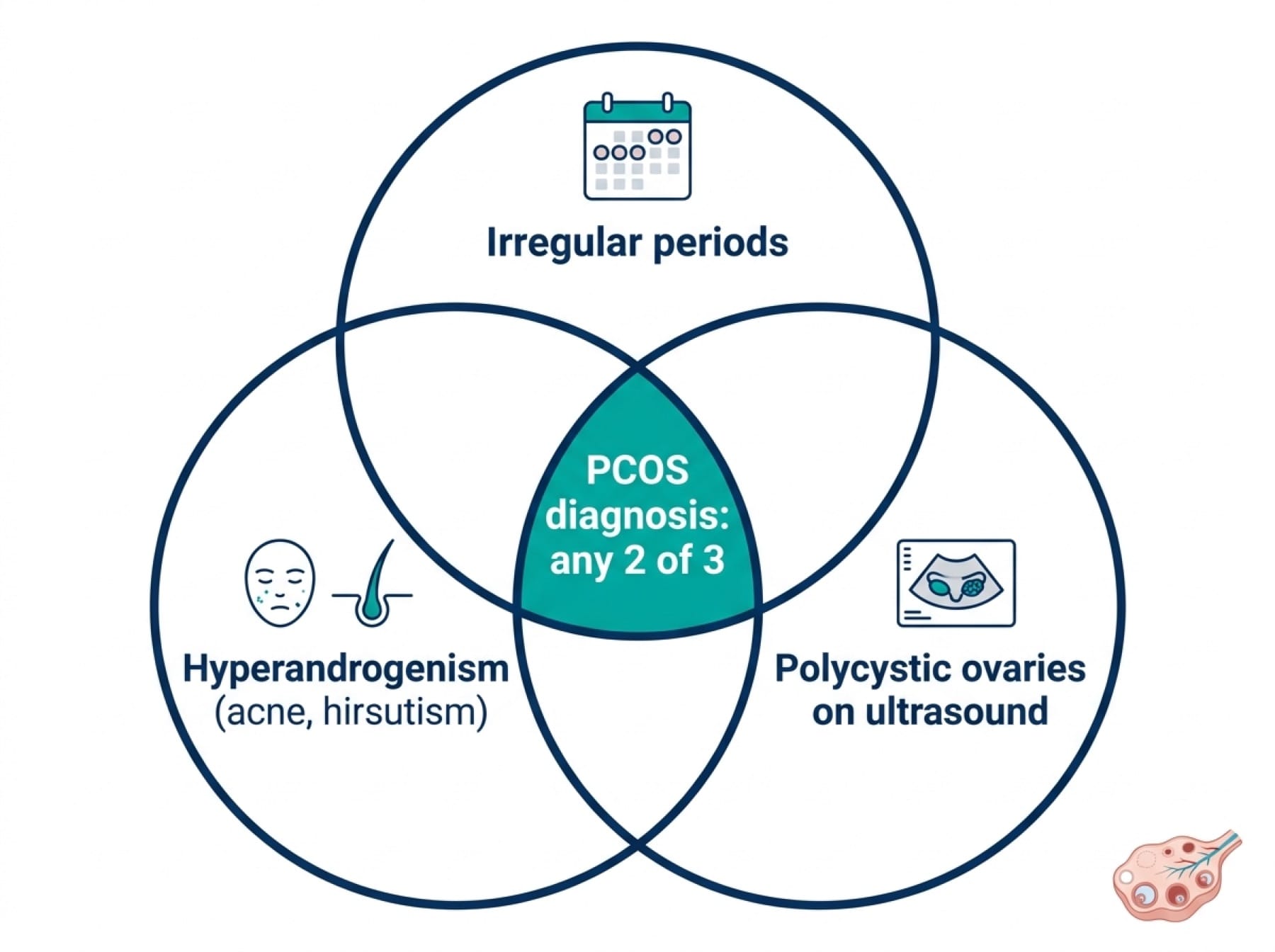
Venn diagram of the Rotterdam PCOS criteria: irregular periods, hyperandrogenism, and polycystic ovaries on ultrasound
The variation in these numbers explains a great deal. When someone says "1 in 5 Indian women has PCOS," they are using Rotterdam criteria. When a more conservative estimate is cited, it is typically NIH criteria. Both are legitimate scientific positions. The honest answer is that PCOS prevalence in India ranges from approximately 7% to 20% depending on which diagnostic lens is applied, and the actual burden is likely at the higher end because under-diagnosis is widespread.
Why India Has Higher PCOS Rates Than the Global Average
The global prevalence of PCOS is estimated at 8% to 13% per the WHO PCOS factsheet. Indian rates, on most estimates, sit above this range. Several converging factors help explain why.
Insulin resistance and the Indian metabolic profile
Indian women, as a population, carry a higher metabolic risk profile than is apparent from BMI alone. Insulin resistance, which is central to PCOS pathophysiology, is more common at lower BMIs among South Asians compared to Western populations. A woman with a BMI of 24 who would be classified as normal weight by global standards may still carry the visceral fat and metabolic dysfunction associated with insulin resistance in the Indian context. The Ganie 2024 nationwide study found that when Asian BMI cutoffs were applied rather than global standards, the proportion of women with PCOS classified as obese rose from 10.9% to 43.2%.
Diet: refined carbohydrates and ultra-processed foods
India's rapid dietary transition, from traditional whole-grain and legume-based meals toward refined carbohydrates, packaged foods, and sugar-heavy beverages, has amplified insulin resistance at a population level. High glycaemic load diets directly worsen insulin resistance, which in turn worsens androgen excess and menstrual dysregulation in women with PCOS susceptibility.
Vitamin D deficiency
India has a well-documented vitamin D deficiency problem, with nearly three in four Indians having insufficient levels despite abundant sunlight. Observational research summarised in the ICMR review (PMC6902362) has associated low vitamin D status with worsened insulin resistance and androgen excess in women with PCOS, suggesting that India's widespread deficiency may be a contributing amplifier. See our Vitamin D deficiency in India guide for the full picture.
Sedentary urban lifestyles
The Ganie 2024 study found that PCOS prevalence was consistently higher in urban versus rural areas across all diagnostic criteria. Urban women in India report more sedentary work patterns, longer indoor hours, and less incidental physical activity. Exercise is one of the most evidence-supported interventions for PCOS, and its absence is a structural risk factor.
Geographic variation within India
PCOS is not evenly distributed across India. The Ganie 2024 study found the highest rates in Central and North India and the lowest in Northeastern India. The Bharali 2022 meta-analysis noted that most Indian studies to date have been from Southern India, leaving significant geographic gaps in the data. The clinical picture in rural India and in the northeast remains substantially under-researched.
Symptoms: Why PCOS Goes Undiagnosed for Years
PCOS is frequently described as a disorder with no single defining symptom, which is precisely why it escapes detection for so long. Each individual symptom of PCOS has a plausible alternative explanation, and in the Indian healthcare context, those alternative explanations are usually the ones that get offered first.
The core symptoms are irregular or absent menstrual periods, acne and oily skin, excess facial or body hair (hirsutism), hair thinning or scalp hair loss, unexplained weight gain (particularly around the abdomen), fatigue, and mood changes including anxiety and depression. The Bharali 2022 meta-analysis found the proportion of women with hirsutism, measured by the Ferriman-Gallwey score (a standardised visual scale for rating excess body hair), was highly variable across Indian studies, ranging from 1.6% to 37.9%, reflecting both the diversity of PCOS presentations and the inconsistency of clinical measurement in India.
In practice, the symptoms are dismissed in several predictable ways. Irregular periods are attributed to stress, travel, or "adolescent settling." Weight gain is attributed to diet without any investigation of hormonal drivers. Acne in a woman in her late twenties is treated with topical products rather than investigated as a symptom of androgen excess. Hair loss is labelled as seasonal or nutritional without hormonal evaluation.
The consequences of this systematic under-recognition are not trivial. The Delhi NCR 2024 study found that among women aged 18 to 25 who were found to have PCOS, nearly 30% were newly diagnosed during the study, meaning they had the condition and did not know. For a condition with significant metabolic consequences if left untreated, a multi-year diagnostic delay is a public health problem.
Why It Goes Undiagnosed: The Metabolic Half No One Looks At
Here is the core reason PCOS goes undiagnosed in India at the rate it does: the symptoms Indian doctors and patients flag as PCOS (irregular periods, weight gain, hirsutism) are only the reproductive surface of a metabolic condition. The metabolic half (dyslipidemia, NAFLD, insulin resistance, metabolic syndrome) carries the worse long-term consequences and is what most diagnostic workups in primary care miss. This is why one in five women carry it without the system catching it. The Ganie 2024 nationwide study, which included comorbidity data from nearly 10,000 Indian women with confirmed PCOS, found the following in the PCOS group:
| Comorbidity | Prevalence in Indian women with PCOS (Ganie 2024) |
|---|---|
| Any dyslipidemia (abnormal blood lipids) | 91.9% |
| Obesity (using Asian BMI cutoffs) | 43.2% |
| Non-alcoholic fatty liver disease (NAFLD) | 32.9% |
| Metabolic syndrome | 24.9% |
| Hypertension | 8.3% |
| Type 2 diabetes | 3.4% |
These are not rare complications. Dyslipidemia means abnormal levels of cholesterol and triglycerides in the blood. It was present in over 9 out of 10 women with PCOS in the study. Non-alcoholic fatty liver disease (NAFLD) is fat building up in the liver in someone who does not drink heavily. It affected nearly 1 in 3. Metabolic syndrome bundles high blood sugar, abnormal lipids, high blood pressure, and central obesity into one diagnosis. It was present in nearly 1 in 4.
The mental health dimension is equally significant. Women with PCOS in India report substantially elevated rates of anxiety, depression, and poor health-related quality of life compared to women without the condition. The stigma attached to visible symptoms including excess body hair and weight gain in Indian social contexts compounds the psychological burden.
Long-term risk, if PCOS is left unmanaged, includes significantly elevated risk of Type 2 diabetes, cardiovascular disease, and endometrial cancer (cancer of the uterine lining, associated with prolonged anovulation, meaning the lack of regular ovulation, and unopposed oestrogen exposure, meaning oestrogen acting on the uterine lining without the balancing effect of progesterone).
PCOS Treatment in India: What the Evidence Supports
PCOS has no single cure because it is a syndrome with multiple contributing mechanisms. Treatment is therefore aimed at the specific features causing the most distress or health risk in a particular woman, and at preventing long-term metabolic complications. The Bharali 2022 meta-analysis explicitly calls for "more acceptable and uniform diagnostic criteria" and better management guidelines in India. As of 2024, India does not have a single nationally endorsed PCOS management guideline.
The evidence supports the following approach:
First line: lifestyle modification
For most women with PCOS, lifestyle modification is the most evidence-supported and sustainable first intervention. Even a 5% to 10% reduction in body weight in women who are overweight has been shown to restore menstrual regularity, reduce androgen levels, and improve insulin sensitivity. This is not a minor effect: weight loss of this magnitude can restore ovulation in women who were previously anovulatory (not ovulating regularly), without any pharmacological intervention.
Metformin for insulin resistance
Metformin is a medication that improves insulin sensitivity. It is widely used in Type 2 diabetes management. In PCOS, it is commonly prescribed for women who are overweight or have confirmed insulin resistance. It reduces circulating insulin levels. Lower insulin reduces the ovarian stimulus to produce excess androgens. Metformin is not right for every woman with PCOS. Dosage should be set by a physician based on blood glucose, insulin, and kidney function.
Oral contraceptive pills for menstrual regulation
Combined oral contraceptive pills (OCPs) are frequently prescribed to regulate menstrual cycles and reduce androgen-related symptoms including acne and hirsutism. They suppress ovarian androgen production and provide endometrial protection (preventing the thickening of the uterine lining associated with infrequent ovulation). OCPs address symptoms but do not treat the underlying metabolic dysfunction; they are typically used alongside lifestyle modification.
Ovulation induction for fertility
For women with PCOS who want to conceive, letrozole (an aromatase inhibitor that blocks oestrogen production and triggers ovulation) has largely replaced clomiphene (an older ovulation-induction drug that stimulates the brain to release more FSH) as the first-line ovulation induction agent, based on clinical trial evidence showing superior live birth rates. This requires gynaecological supervision and monitoring.
Anti-androgens for hirsutism and hair loss
Medications such as spironolactone (an anti-androgen that blocks the effect of testosterone on hair follicles and skin) are used for hirsutism and scalp hair loss. These are typically adjuncts to hormonal treatment and require physician guidance, particularly regarding contraception (spironolactone is teratogenic and should not be taken during pregnancy).
PCOS Diet in India: What Actually Works
Dietary modification is central to PCOS management and is particularly relevant in the Indian context, where the diet is undergoing rapid transition toward high-glycaemic, ultra-processed foods. The core dietary principle in PCOS management is reducing insulin resistance by lowering the glycaemic load (the speed and magnitude at which food raises blood sugar).
The Indian food environment offers both risks and opportunities. The traditional Indian diet, built on dals, sabzi (cooked vegetables), whole grains, and spices, is inherently closer to a low-glycaemic pattern than the modern urban diet. The shift toward white rice, maida (refined wheat flour), sugary beverages, and packaged snacks has moved many urban Indian women in the wrong direction.
Evidence-supported dietary principles for PCOS in the Indian context:
- Prioritise low-glycaemic grains: replace white rice and maida with whole wheat, jowar, bajra, ragi, and oats. These digest more slowly and produce a lower, more gradual rise in blood sugar.
- Eat dal and legumes at every meal: protein and fibre at each meal slow carbohydrate absorption and reduce the post-meal insulin spike. Dal, rajma, chana, and moong are structurally well-suited to this role.
- Limit sugar and sweetened beverages: chai with three spoons of sugar, packaged juices, soft drinks, and sweet curd contribute significantly to glycaemic load without nutritional benefit.
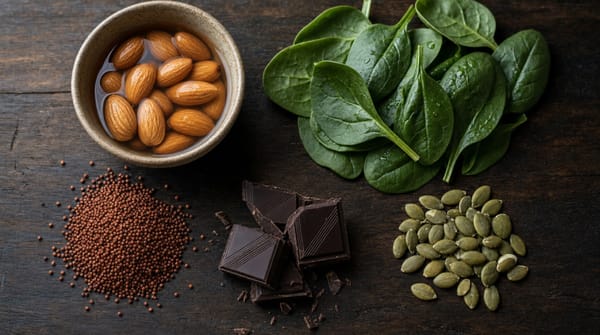
- Include healthy fats: ghee, nuts, seeds, and cold-pressed oils in moderate quantities support hormonal synthesis and reduce inflammation. The fear of fat in the context of PCOS is largely misplaced; it is refined carbohydrates, not healthy fats, that drive insulin resistance most directly.
- Reduce ultra-processed foods: biscuits, namkeen, instant noodles, and packaged snacks are high in refined carbohydrates, seed oils, and sodium, each of which independently worsens the PCOS metabolic profile.
- Consider anti-inflammatory spices: turmeric and cinnamon have been investigated for effects on insulin sensitivity in early-phase research that is not PCOS-specific. Evidence is preliminary and they should not replace medical treatment, but they have no downside as dietary additions.
Specific to the Indian PCOS context: vitamin D supplementation, where deficiency is confirmed by a serum 25(OH)D test, has been associated with improvement in insulin resistance and hormone profiles in the ICMR-summarised observational research cited above. (For more on India's vitamin D problem and where lifestyle marketing claims tend to mislead, see our natural vs chemical myths guide and the vitamin D deficiency in India deep-dive.) This should be assessed and managed under medical supervision.
Who Should Be Tested in India
PCOS remains substantially undiagnosed because India lacks a systematic screening programme, and the condition is not included in the standard investigations offered at most primary care consultations. Women in the following groups have a higher likelihood of PCOS and should consider discussing testing with their doctor:
- Irregular periods (fewer than 8 cycles per year, or cycles longer than 35 days)
- Persistent acne in adulthood, particularly on the jaw and lower face
- Excess facial or body hair beyond what is typical for the family
- Unexplained weight gain, especially around the abdomen
- Difficulty conceiving after 12 months of trying
- Family history of PCOS, Type 2 diabetes, or premature cardiovascular disease
- Mood changes, persistent fatigue, or sleep disruption without clear cause
The diagnostic workup for PCOS typically includes a serum hormone panel (LH and FSH, the two pituitary hormones that regulate the menstrual cycle; testosterone, the main male hormone that is elevated in PCOS; prolactin, the milk-production hormone; and TSH, the thyroid-stimulating hormone, to rule out thyroid causes), a fasting glucose and insulin test, a lipid panel, and a pelvic ultrasound. This can be requested through any gynaecologist or endocrinologist and is available at most diagnostic labs in India.
The Awareness Gap: Why Most Indian Women Don't Know
The Bharali 2022 meta-analysis concluded with a direct recommendation to policymakers: India needs better screening guidelines and more public awareness of PCOS. The Delhi NCR 2024 study confirmed the detection gap: nearly 30% of PCOS cases in the study cohort were newly identified, meaning those women had lived with the condition without a diagnosis.
The awareness problem in India operates at multiple levels. At the individual level, many women do not know that irregular periods are a symptom worth investigating rather than a normal variation to tolerate. At the family level, symptoms are often attributed to stress, lifestyle, or marriage-related changes. At the healthcare system level, primary care consultations rarely include hormonal evaluation, and the diagnostic criteria for PCOS are inconsistently applied even where testing does occur.
The consequence is that women with PCOS in India typically receive a diagnosis later than in Western healthcare systems, after years of accumulating metabolic damage that could have been partially prevented through early lifestyle intervention.
The Bottom Line
PCOS is not a rare condition and it is not just a fertility problem. It is one of the most common hormonal and metabolic disorders in Indian women, affecting between 1 in 9 and 1 in 5 depending on which diagnostic criteria is applied, and it carries serious long-term consequences for cardiovascular health, metabolic function, and mental wellbeing that are independent of whether the woman wants to have children.
The good news is that PCOS is manageable. Lifestyle modification, appropriate medical treatment, and regular monitoring can substantially reduce its long-term consequences. The first step is knowing you have it.
Action this week. If you recognise the symptoms described in this article, the single concrete next step is to book a gynaecologist or endocrinologist consultation in the next 7 days and ask specifically for a hormone panel (LH, FSH, testosterone, prolactin, TSH), a fasting glucose and insulin test, a lipid panel, and a pelvic ultrasound. That panel is widely available at Indian diagnostic labs at a reasonable cost; ask any major chain (Metropolis, SRL, Thyrocare, Apollo) for the consolidated PCOS workup price before booking. It gives your doctor everything needed to confirm or rule out PCOS. Not a supplement. Not a diet change made in isolation. The test panel first; everything else follows from that.
Think Care · Think SwasthiQ
Related reading: Vitamin D deficiency in India: why sunlight is not enough | Endometriosis: the condition affecting 1 in 10 Indian women that medicine keeps missing