
Vitamin D Deficiency in India: Why Sunlight Is Not Enough
India gets abundant sunshine, yet nearly three in four Indians lack adequate vitamin D. Eight converging causes, Metropolis 2025 data, and what to do.

Note: This article is for informational purposes only. A serum 25(OH)D blood test is the only reliable way to confirm vitamin D deficiency. Consult a doctor before changing your supplementation routine.
A 2025 nationwide study by Metropolis Healthcare, based on over 22 lakh test results collected between 2019 and 2025, found that 46.5% of Indians have vitamin D deficiency, with a further 26% classified as insufficient. That means nearly three in four Indians do not have adequate vitamin D levels. Among teenagers aged 13 to 18, the rate climbs to 66.9%.
India receives abundant sunshine for most of the year. So why does vitamin D deficiency in India affect the majority of the population? The answer involves eight converging factors, and most of them have nothing to do with the sun itself.
Three out of four Indians are vitamin D deficient because eight non-sunlight factors converge to override India's tropical climate advantage. This blog maps each factor with the evidence behind it, identifies who is most at risk, and sets out the combination of steps that actually works: strategic sun exposure, deliberate dietary choices, periodic testing, and supplementation when confirmed deficient.
India is building a connected healthcare ecosystem on shared digital rails (ABDM, FHIR R4, NHCX), and the same logic applies to preventive health: a vitamin you can measure with a Rs. 600 blood test is leverage if you actually measure it. SwasthiQ writes about India-specific preventive health evidence so Indian families and clinic owners can act on what the data actually shows, not on what the wellness industry wants you to believe.
What Vitamin D Does and Why It Matters More Than Most People Realise
Vitamin D is a fat-soluble vitamin (meaning it is stored in body fat rather than flushed out like water-soluble vitamins) with functions that go well beyond bone health. A 2025 expert consensus published in the Indian Journal of Endocrinology and Metabolism, developed by 41 endocrinologists using the DELPHI method (a structured consensus technique using multiple rounds of expert questionnaires to reach agreement), recommends maintaining serum 25(OH)D levels of 40 to 60 ng/mL for optimal health.
Vitamin D plays a documented role in:
- Calcium absorption and bone mineralisation: deficiency in childhood causes rickets (soft, weak bones in growing children); in adults, it accelerates osteoporosis (bone thinning that raises fracture risk)
- Immune system regulation: low vitamin D is associated with increased susceptibility to infections including tuberculosis and respiratory illness
- Muscle strength and function: muscle weakness is among the earliest clinical signs of deficiency
- Mood regulation: observational research (summarised in a 2020 Journal of Affective Disorders systematic review by Cheng et al.) links low vitamin D status to increased risk of depressive symptoms, though causality is not established
- Cardiovascular health: Ritu G and Gupta A (PMC review, 2014) note associations between vitamin D deficiency and cardiovascular disease risk in the Indian population
Unlike most vitamins, vitamin D can be synthesised in the skin when exposed to UVB (ultraviolet B) rays from sunlight. This should make India naturally advantaged. It does not.
Vitamin D Deficiency Symptoms in India: Why It Stays Hidden
Primary keyword: vitamin D deficiency symptoms India.
One of the biggest clinical challenges is that vitamin D deficiency often goes undiagnosed for years. Symptoms are non-specific and overlap with everyday fatigue, seasonal changes, and stress.
Common symptoms to watch for:
- Persistent fatigue or low energy with no clear cause
- Bone pain and lower back pain, particularly in the lumbar region (the lower back, just above the pelvis)
- Muscle weakness, especially in the legs
- Frequent infections: colds, flu, or recurring respiratory illness
- Mood changes, including low mood or mild depression
- Hair thinning (limited observational evidence; limited evidence base, not yet established as causal)
Left untreated, deficiency increases the long-term risk of osteoporosis, cardiovascular diseases, autoimmune conditions, and in children, impaired bone development and cognitive function (Ritu G and Gupta A, PMC review, 2014).
Eight Reasons Why Sunlight Is Not Enough for Most Indians
The Metropolis study and earlier peer-reviewed research point to the same cluster of converging causes. Here is what the evidence says about each.
1. Indoor lifestyles and urbanisation
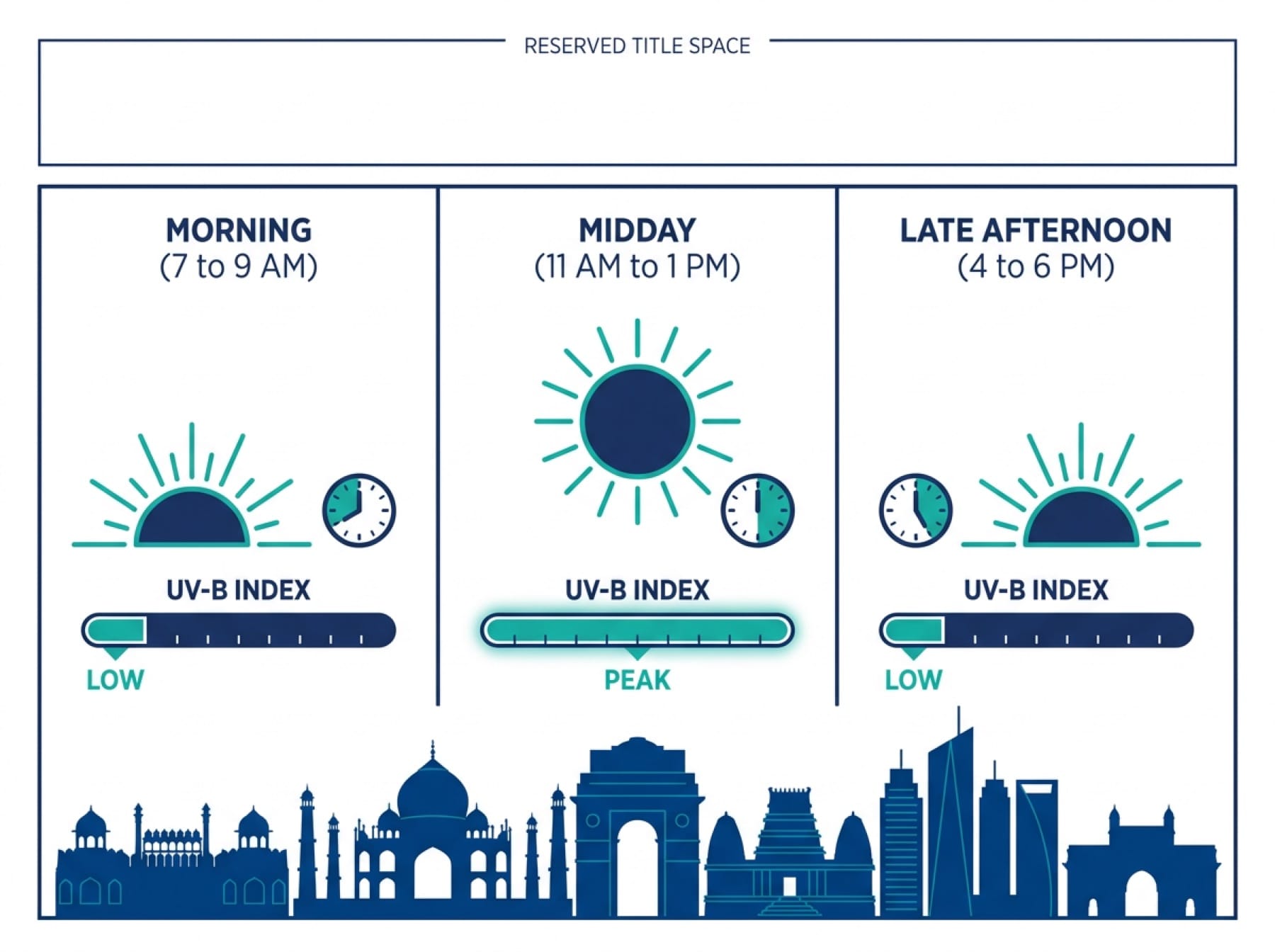
Modern Indian urban life is predominantly indoors. Office jobs, long commutes in enclosed vehicles, and screen-heavy routines mean most working adults spend the majority of daylight hours inside. Even when stepping out, exposure often occurs in early morning or evening, when UVB levels are too low for synthesis, or in shaded areas for very short durations. UVB rays essential for vitamin D synthesis are strongest between 10 AM and 3 PM, which is when most professionals are at their desks.
2. Air pollution filtering UVB rays
Air pollution is a major but underappreciated factor. Cities like Delhi, Mumbai, and Kanpur experience particulate matter concentrations that physically block UVB radiation from reaching the skin. The effect: even when outdoors, your skin may not be receiving the UVB wavelengths needed for synthesis.
The Metropolis study found that North India, among the most polluted regions, reported the highest urban deficiency rates, while South India recorded the highest overall regional deficiency at 51.6%.
3. Skin pigmentation and melanin
India's population predominantly has medium to dark skin tones, rich in melanin (the pigment that gives skin its colour and acts as a natural UV filter). Melanin protects against harmful radiation but also reduces the rate of vitamin D synthesis. Darker skin requires 2 to 6 times longer sun exposure than lighter skin to produce an equivalent amount of vitamin D. The same sun exposure that is sufficient for a fair-skinned person is often inadequate for most Indians (PMC review, Ritu G and Gupta A, 2014).
4. Cultural and clothing practices
In many regions and communities across India, cultural norms and dress practices minimise the skin area exposed to sunlight. Full-sleeved clothing, head coverings, and a preference for staying indoors during peak heat hours all reduce vitamin D synthesis opportunity.
These factors disproportionately affect women. The Metropolis study found 63% of women tested were vitamin D deficient, compared to 56% of men.
5. Dietary gaps: vitamin D-rich foods are largely absent from Indian diets
Natural food sources of vitamin D are limited globally and particularly scarce in Indian diets. The richest sources, including fatty fish, egg yolks, and fortified dairy, are either absent from vegetarian and lacto-vegetarian diets or consumed irregularly. Ritu G and Gupta A (PMC review, 2014) note that vitamin D-rich foods are predominantly of animal origin. The result: dietary contribution to vitamin D levels in most Indians is negligible.
Vitamin D-containing foods relevant to Indian diets:
- Fatty fish: salmon, mackerel, rohu (for non-vegetarians)
- Egg yolks: modest source, but accessible
- Fortified milk, cereals, and bread where available
- Mushrooms exposed to UV light: the only plant-based significant source
Grid of Indian vitamin D food sources including fortified milk, salmon, and eggs
6. Limited food fortification in India
In the US, UK, and Canada, staple foods such as milk, cereals, and margarine are mandatorily or widely fortified with vitamin D. In India, fortification remains limited and inconsistent. Most commonly consumed staples, including rice, wheat flour, and pulses, contain negligible vitamin D. This creates a structural dietary gap that food choices alone cannot close for most of the population.
7. High phytate intake in rural populations
A finding that surprises many: rural Indians, who by occupation have adequate sun exposure, also show high rates of vitamin D deficiency. The PMC review attributes this to a diet high in phytates (natural compounds in whole grains, legumes, and cereals that bind to calcium and reduce its absorption), combined with low calcium intake.
Phytates interfere with calcium absorption, which in turn affects how effectively vitamin D operates in the body. This explains why the rural-urban divide on vitamin D is narrower than expected.
8. Obesity, liver or kidney conditions, and gut absorption issues
Certain physiological factors reduce vitamin D availability even when sun exposure and diet are adequate. Because vitamin D is fat-soluble, in people with higher body fat it gets sequestered in adipose tissue (body fat stores) and is less available for circulation (Wortsman et al., American Journal of Clinical Nutrition, 2000).
Liver and kidney disorders impair the conversion of vitamin D to its active hormonal form. Poor gut absorption, common in conditions like irritable bowel syndrome (a chronic gut disorder that causes abdominal pain and irregular bowel movements), reduces uptake from food and supplements.
Vitamin D from Sunlight in India: Are You Getting It Right?
Simply being outdoors is not enough. Effective vitamin D synthesis from sunlight requires all of these conditions to be met simultaneously:
- Time of day: between 10 AM and 3 PM only; morning and evening sun has insufficient UVB intensity
- Duration: 15 to 30 minutes minimum; longer for darker skin tones, up to 45 to 60 minutes
- Skin exposed: arms and legs, not just face and hands; more skin surface means more synthesis
- No glass barrier: car windows and window glass block UVB entirely; being indoors in sunlight does not count
- No sunscreen during this window: sunscreen with SPF 15 or above reduces vitamin D synthesis by up to 99% (Matsuoka et al., Journal of Clinical Endocrinology and Metabolism, 1987)
- Reasonable air quality: heavy pollution days in Delhi or industrial cities significantly reduce effective UVB reaching the skin

Diagram comparing UV-B strength across morning, midday, and evening sun exposure
Most urban Indians unknowingly miss several of these conditions at once: wrong timing, wrong clothing, wrong duration, or pollution-filtered UVB. The result is that outdoor time does not translate into vitamin D production.
Who Is Most at Risk in India
Vitamin D deficiency in India does not cluster neatly into one demographic. The Metropolis Healthcare study found it across all groups:
- Teenagers (13 to 18 years): highest deficiency rate at 66.9%
- Women: 63% deficient vs 56% of men in the Metropolis study
- Working professionals: indoor lifestyles and peak-hour indoor confinement
- The elderly: reduced skin synthesis efficiency with age, plus reduced outdoor mobility
- Vegetarians and vegans: limited dietary vitamin D sources
- People with obesity, liver or kidney conditions: impaired conversion and sequestration
- Rural populations: despite adequate sun exposure, high-phytate diets undermine calcium metabolism
Scientific Reports (2022) estimates approximately 490 million Indians are vitamin D deficient, of whom 31% are children and adolescents. The burden is national in scale.
How to Improve Vitamin D Levels: An Evidence-Based Approach
The 2025 Indian Journal of Endocrinology and Metabolism consensus provides the most current India-specific guidance. Here is a practical summary.
1. Optimise sun exposure strategically
- Step out between 10 AM and 3 PM, not early morning or evening
- Expose arms and legs, not just face and hands
- Aim for 15 to 30 minutes, longer for darker skin tones
- Skip sunscreen for this brief window; reapply if staying out longer
- Do this at least 3 to 4 days per week
2. Adjust your diet deliberately
- Include egg yolks regularly if non-vegetarian
- Choose fortified milk, yogurt, and cereals where available; check labels
- Add mushrooms that have been exposed to sunlight, a meaningful plant-based source
- If non-vegetarian, include fatty fish 2 to 3 times per week
3. Consider supplementation under medical guidance
For most Indians with confirmed deficiency, diet and sun exposure alone are unlikely to restore levels to 40 to 60 ng/mL. The 2025 Indian endocrinologist consensus recommends supplementation for confirmed cases, with the dose, form (D2 vs D3), and duration determined by a physician based on serum levels.
Do not self-supplement high-dose vitamin D without a blood test first. Vitamin D toxicity, while rare, is a real risk with megadose supplementation.
4. Get tested annually if you are in a high-risk group
The 2025 consensus notes that vitamin D deficiency is highly prevalent in India but lacks standardised management guidelines nationally. Annual testing is reasonable for adults in high-risk groups: indoor workers, women, vegetarians, people with obesity, and those over 60.
The standard test is a serum 25(OH)D (25-hydroxyvitamin D) blood test, available at most diagnostic labs in India at a cost of roughly Rs. 600 to Rs. 1,200.
The Bottom Line
India's vitamin D crisis is not caused by a lack of sunlight. It is caused by eight converging factors: urban indoor lifestyles, pollution, melanin-rich skin, dietary gaps, limited food fortification, cultural clothing norms, high-phytate rural diets, and individual health conditions. Together they override the natural advantage of a tropical climate.
The solution is not one change but a combination: strategic sunlight exposure, deliberate dietary choices, periodic testing, and supplementation when confirmed deficient. None of these steps is complex. All of them are actionable.
Vitamin D deficiency is the most underdiagnosed nutritional deficiency in India. The first step to addressing it is knowing your level.
Note: These symptoms are not diagnostic on their own. A serum 25(OH)D blood test is the only reliable way to confirm vitamin D deficiency. If you have several of these symptoms persistently, speak to a doctor before self-supplementing.
Think Care · Think SwasthiQ
Related reading: Natural vs Chemical: busting the health myths that won't die | Microplastics in your blood: what the science actually says