The Annual Health Tests Every Indian Adult Should Get, by Age Group
India's NCD burden arrives earlier than anywhere else. One in four urban Indians aged 30-39 already has hypertension, often undiagnosed. A 35-year-old Indian is not in the same cardiovascular risk category as a 35-year-old European. This guide provides a by-age-group preventive health testing schedu
Important: This guide provides general preventive screening recommendations based on Indian epidemiology and clinical guidelines. It does not constitute medical advice. Your doctor should personalise screening schedules based on your individual risk factors, family history, symptoms, and existing conditions. Tests recommended here are starting points, not a complete medical evaluation.
The standard Western preventive health timeline (start lipid and glucose testing at 45, get a first colonoscopy at 50, mammography from 50 onwards) was built on epidemiology from high-income countries where non-communicable diseases (NCDs) arrive later in life. India's epidemiology is different in ways that change every single age threshold.
According to NFHS-5 data, 28.5% of Indian adults aged 18 to 69 have hypertension. A peer-reviewed analysis published in PMC in 2025 (PMC13109650) found that one in four urban Indian adults aged 30 to 39 already has hypertension, often with no awareness of it. The ICMR-INDIAB study has documented that India now has 101 million people living with diabetes and 136 million with pre-diabetes, with a significant proportion in their 30s. Indian adults develop cardiovascular disease, type 2 diabetes, and metabolic syndrome approximately a decade earlier than Western populations.
India's NCD burden arrives a decade earlier than in Western populations, which means the standard Western screening timelines are too late for most Indian adults. A structured preventive testing plan starting at age 30 (or earlier with risk factors) aligned with NFHS-5 epidemiology, NHM NPCDCS guidelines, and ADA recommendations is the evidence-backed approach for Indian adults. This guide organises that plan by age group.
SwasthiQ is building Healthcare Rails for India, the connected ecosystem that links preventive screening results, longitudinal lab values, and clinical records so a fasting glucose drift from 92 to 105 to 118 across three years is something a doctor recognises as pre-diabetes turning into diabetes, not three isolated reports filed in three different folders.
Official sources: NHM NPCDCS | ADA Standards of Care 2024 | NFHS-5 | PMC13109650 | PMC12744483, Thyroid India reference study
The Tests Every Indian Adult Needs, Regardless of Age
Before the age-specific schedule, three categories of tests apply at every age from 18 onwards and should be part of any baseline health evaluation.
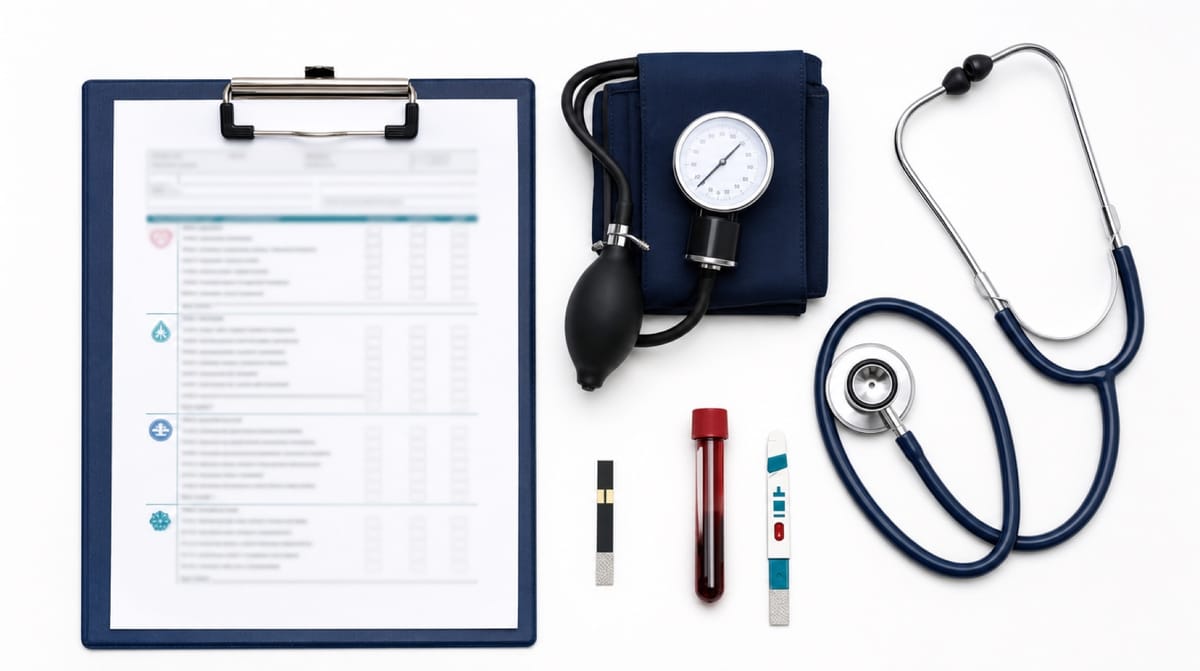
Blood pressure measurement is the single most important preventive assessment for any Indian adult at any age. It is non-invasive, costs nothing, takes two minutes, and is available at every government health centre, pharmacy, and clinic in India. Blood pressure should be checked at least once a year if normal (below 120/80 mmHg), or more frequently if elevated. Hypertension is a silent condition. The majority of Indians with elevated blood pressure have no symptoms. NFHS-5 documents that a substantial proportion of hypertensive Indians are unaware of their status.
BMI and waist circumference are anthropometric measurements that inform cardiovascular, metabolic, and cancer risk. For Indian adults, the Asian BMI thresholds apply: overweight begins at a BMI of 23 kg/m², and obesity at 25 kg/m², values that are lower than the Western thresholds of 25 and 30 respectively. This distinction exists because Indian adults carry metabolic risk at lower body weights due to the thin-fat phenotype (higher visceral fat despite lower BMI). Waist circumference above 90 cm in men and above 80 cm in women indicates central obesity and elevated cardiometabolic risk for Indian adults.
Complete Blood Count (CBC) should be performed at least every one to two years in Indian adults of all ages, and annually in women of reproductive age. NFHS-5 found that 57% of Indian women and 25% of Indian men are anaemic by WHO definitions (haemoglobin below 12 g/dL in non-pregnant women, below 13 g/dL in men). Iron deficiency is the most common cause, followed by B12 and folate deficiency. Anaemia is frequently asymptomatic at mild levels yet impairs cognitive function, exercise capacity, and immunity. In pregnancy, it carries serious foetal risks. The CBC costs under Rs. 200 at most Indian labs and provides essential baseline data.
Ages 20 to 29: The Baseline Visit
For healthy adults in their 20s with no family history or known risk factors, comprehensive screening is not yet standard practice in most Indian contexts, but this decade is when baseline values should be established and important habits set.
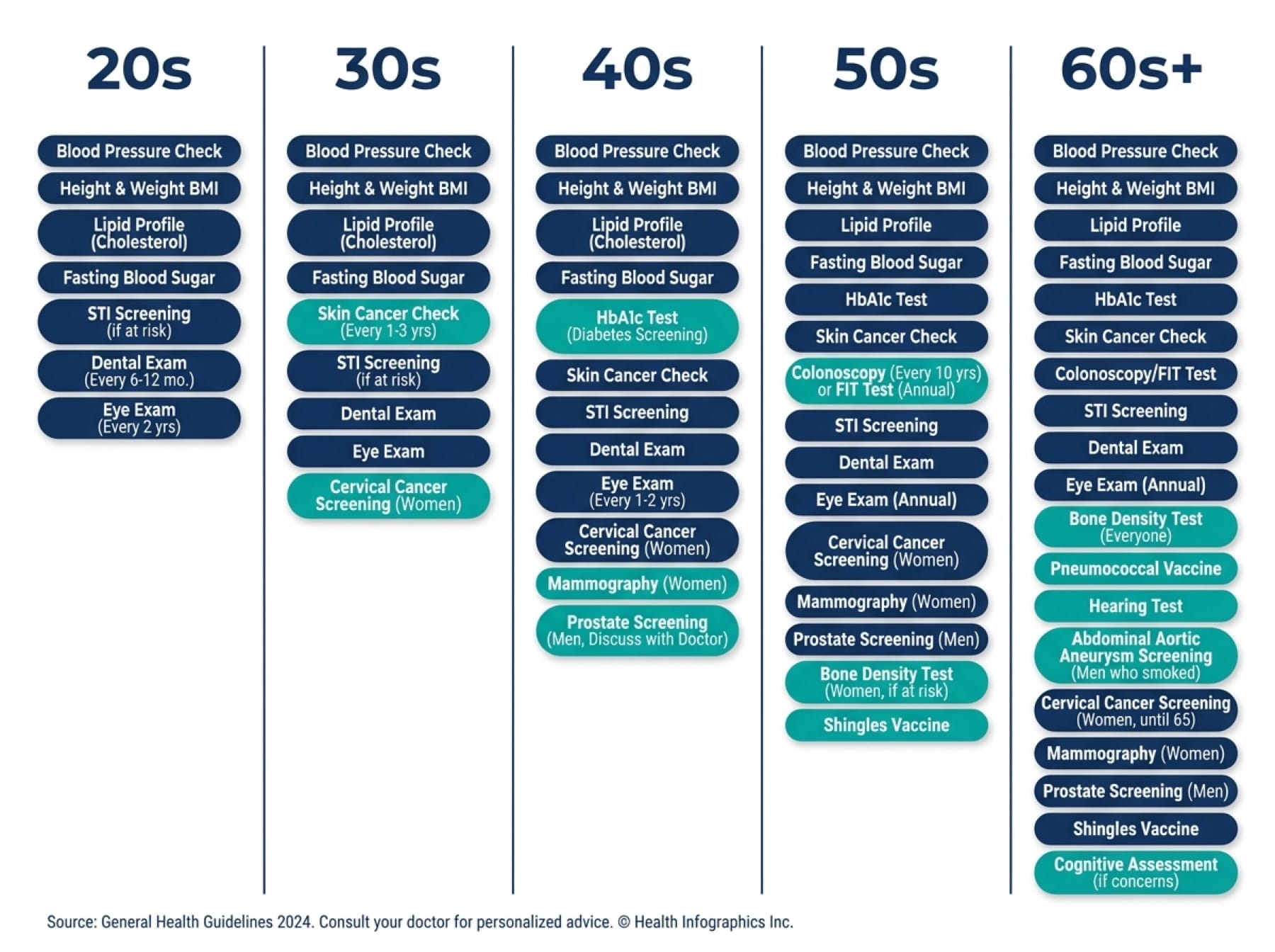
Vector infographic of recommended health tests by decade, from 20s through 60s and beyond
CBC to establish baseline haemoglobin, WBC, and platelet levels. Women in this age group have particularly high rates of iron deficiency anaemia.
Fasting blood glucose once in this decade, or more frequently if there is a family history of diabetes, overweight status, or PCOS. While the ADA's universal diabetes screening threshold is age 35, South Asian ethnicity itself is a recognised risk factor that justifies earlier testing, and ICMR-INDIAB data documents diabetes in Indians in their 20s.
Blood pressure annually. Hypertension in the 20s is uncommon but not rare, particularly in those with obesity, sedentary lifestyle, or family history.
Lipid profile at least once in the late 20s (by age 28-30) to establish a baseline, even in the absence of symptoms. Familial hypercholesterolaemia, a genetic condition causing very high LDL from young adulthood, is not rare and is frequently missed because cholesterol is not checked until middle age.
Vitamin B12 particularly for vegetarians and vegans. Vitamin B12 is found exclusively in animal products. Indian vegetarians have documented high rates of deficiency, and deficiency in young adults causes neurological consequences including peripheral neuropathy and cognitive changes that may not be attributed to B12 in time. A single injection or course of oral B12 supplements costs very little.
For women in this age group: Cervical cancer screening by VIA (Visual Inspection with Acetic Acid, a low-cost screening method where the cervix is examined after applying dilute vinegar that turns abnormal areas white), Pap smear, or HPV test is recommended from age 25 to 30 per NHM NPCDCS guidelines, with repeat screening every three to five years depending on results. India has one of the world's highest cervical cancer burdens, and Human Papillomavirus (HPV) infection (the cause of virtually all cervical cancer) is detectable and preventable. Breast self-examination monthly from the early 20s establishes familiarity with normal breast anatomy, making any future change detectable earlier.
Ages 30 to 39: The Decade When NCDs Arrive
This is the single most important screening decade for Indian adults. A peer-reviewed 2025 paper in a PMC-indexed journal (PMC13109650) explicitly proposes age 30 as the new Indian baseline for NCD screening, specifically for blood pressure, diabetes, and lipid disorders, citing NFHS-5, ICMR-INDIAB, and WHO data showing that these conditions are now prevalent in urban Indians before age 40.
Fasting blood glucose and HbA1c (HbA1c is a blood test showing your average blood sugar over the past three months, used to diagnose and monitor diabetes) annually from age 30, or from age 25 with any of the following: BMI above 23, family history of diabetes in a first-degree relative, history of gestational diabetes, PCOS, or physical inactivity. The ADA's fasting glucose thresholds (below 100 normal; 100 to 125 pre-diabetes; 126 or above diabetes) and HbA1c thresholds (below 5.7% normal; 5.7 to 6.4% pre-diabetes; 6.5% or above diabetes) are the standard used in Indian clinical practice by RSSDI. Pre-diabetes is reversible with lifestyle intervention. Catching it in the 30s creates a meaningful window for prevention.
Lipid profile every year from age 30, or every two to three years if completely normal and without cardiovascular risk factors. The NCEP ATP III classification is standard: total cholesterol below 200 mg/dL is desirable; LDL below 100 mg/dL is optimal; HDL below 40 mg/dL in men or below 50 mg/dL in women is low; triglycerides below 150 mg/dL is normal. Indian patients frequently have a characteristic pattern of low HDL with high triglycerides even with normal total cholesterol, which is cardiovascular risk that does not show up on a simple "total cholesterol" reading. The full lipid panel is essential.
Blood pressure every six months to one year in this decade. One in four urban Indians in their 30s has hypertension by NFHS-5 data. A blood pressure above 130/80 mmHg on two separate occasions warrants evaluation. A reading above 140/90 mmHg at any point should not be dismissed.
TSH (Thyroid Stimulating Hormone) once in this decade, particularly for women. A multicentre India-specific study published in 2025 (PMC12744483) enrolling 5,812 adults across five Indian regions found that TSH is higher in women than men and that the upper reference limit varies with age and sex. Hypothyroidism (underactive thyroid) is common in Indian women from their 30s and causes fatigue, weight gain, irregular periods, cold intolerance, and hair loss, which are symptoms frequently attributed to stress or anaemia. Annual TSH testing is reasonable for women with any of these symptoms.
Liver function tests (LFT) and kidney function tests (KFT) as part of a baseline comprehensive metabolic panel by age 30 to 35. Non-alcoholic fatty liver disease (NAFLD, now called metabolic-associated steatotic liver disease) affects an estimated 25 to 30% of Indian adults and frequently progresses silently. ALT elevation is often the first detectable sign. KFT including creatinine and eGFR establish baseline kidney function before any deterioration from diabetes or hypertension begins.
Vitamin B12 and Vitamin D particularly for vegetarians (B12) and all adults in urban settings with limited outdoor exposure (Vitamin D). More than 70% of Indian adults across demographic groups have Vitamin D insufficiency despite India's sun exposure, largely because of indoor lifestyles, longer wavelength UV at certain latitudes, skin pigmentation, and clothing. Vitamin D deficiency contributes to bone demineralisation, immune dysfunction, and in pregnant women, foetal skeletal development impairment.
For women in their 30s: Clinical breast examination (CBE) by a trained clinician every one to three years from age 30 per ICMR-NICPR guidelines. This requires no imaging equipment and is available at most government and private health facilities. Continue cervical cancer screening per the schedule begun in the 20s: Pap smear every three years, or HPV test every five years from age 30.
Eye examination once in this decade, particularly for those with diabetes, hypertension, or a family history of glaucoma. Diabetic retinopathy (damage to the blood vessels of the retina caused by poorly controlled blood sugar) is a leading cause of preventable blindness in India and is detectable on a dilated eye exam before vision loss occurs.
Ages 40 to 49: Cardiovascular Risk Assessment Becomes Central
This decade is when the cumulative effect of a decade of unmanaged risk factors begins to produce measurable organ changes, and when screening frequency should increase.
Fasting blood glucose and HbA1c annually without exception. By the 40s, a significant proportion of Indian adults have either diabetes or pre-diabetes, and monitoring gaps in the 30s often mean the condition has been silently progressing.
Lipid profile annually, with attention to non-HDL cholesterol and triglyceride-to-HDL ratio, not just LDL. Indian cardiologists increasingly use these additional calculations because they better reflect the Indian dyslipidaemia pattern.
ECG (Electrocardiogram, a non-invasive test that records the electrical activity of the heart through patches on the chest) as a baseline cardiac test from age 40. A 12-lead ECG identifies rhythm abnormalities, prior silent myocardial infarction, and structural electrical changes. It is inexpensive, widely available, and takes five minutes.
Blood pressure every six months, and at every medical contact.
TSH annually for women in this decade, given the substantially rising prevalence of thyroid disorders in perimenopausal and menopausal Indian women.
LFT (Liver Function Test panel, including ALT/SGPT, AST/SGOT, bilirubin and albumin to assess liver health), KFT (Kidney Function Test, including creatinine, urea and eGFR), urine routine annually if diabetes or hypertension is present; every one to two years otherwise. Proteinuria (protein in urine) is an early sign of diabetic nephropathy and hypertensive kidney damage and is detected on a simple urine routine examination.
For women: Mammography discussion with your doctor from age 40. ICMR-NICPR guidelines recommend clinical breast examination continuing from the 30s, with mammography becoming appropriate screening for most women from age 40 to 45. Women with a first-degree relative with breast cancer, a known BRCA mutation (BRCA1 or BRCA2 are inherited genes that, when mutated, substantially raise lifetime breast and ovarian cancer risk), or prior chest radiation should discuss starting earlier. Continue cervical cancer screening per established schedule. Discuss bone density (DEXA scan, dual-energy X-ray absorptiometry, a low-radiation imaging test that measures bone mineral density at the hip and spine) with your doctor, particularly if there are risk factors for osteoporosis (early menopause, low calcium intake, steroid use, low Vitamin D, low physical activity).
For men from age 40: Discuss PSA (Prostate Specific Antigen, a blood-based marker of prostate cancer risk) testing with your doctor. India has lower prostate cancer incidence than Western countries but it is rising. Individual risk-benefit discussion with a clinician is more appropriate than a universal recommendation.
Ages 50 and Older: Comprehensive Annual Review
By age 50, the preventive health evaluation becomes a structured annual event covering multiple organ systems.
All blood tests from the previous decade should continue annually: fasting glucose, HbA1c, lipid profile, CBC, LFT, KFT, TSH, and urine routine. These are not optional in the 50s. They are the primary tools for detecting and managing the conditions that cause most morbidity and mortality in this age group.
ECG annually. From the 50s, an ECG baseline changes meaningfully over time. Annual testing allows trend-based interpretation.
2D Echocardiography at least once in the early 50s to assess heart structure and function, particularly for those with long-standing hypertension or diabetes, which can cause left ventricular hypertrophy and diastolic dysfunction. This is not part of universal annual screening but is appropriate for high-risk individuals and as a baseline for any adult with known cardiac risk factors.
HbA1c monitoring every three months for those with established diabetes (to monitor control), annually for those without.
Eye examination annually for those with diabetes or hypertension, every two years otherwise. Cataracts, glaucoma, and macular degeneration all increase sharply in incidence from the 50s.
Dental review twice annually. Periodontal disease is independently associated with cardiovascular disease and poorly controlled diabetes, and is frequently neglected in Indian adults.
Bone density (DEXA scan) for women within two years of menopause or by age 65, whichever comes first, if there are additional risk factors. For men, discuss with a doctor if there is a history of fractures, steroid use, or low testosterone.
Colorectal cancer screening from age 45 to 50, per evolving guidelines. India has lower colorectal cancer incidence than Western countries but it is rising. Discuss with your doctor whether stool-based testing or colonoscopy is appropriate based on your family history and risk profile.
For women over 50: Mammography every one to two years, per ICMR guidelines and clinical judgement. Cervical cancer screening continues until age 65, at which point it may be discontinued if prior screenings have been consistently normal. Confirm with your doctor.
India-Specific Tests That Deserve More Attention
Three tests are frequently overlooked in routine Indian health evaluations but are important given India's specific epidemiology.
Vitamin B12 is overlooked because deficiency develops slowly and its neurological symptoms (tingling in hands and feet, poor memory, balance problems, fatigue) are nonspecific and attributed to other causes. In India, where a large proportion of the population is vegetarian or has low animal protein intake, B12 deficiency is extremely common. It causes irreversible neurological damage if untreated for long. A B12 level below 200 pg/mL is deficient. Below 300 pg/mL is borderline and warrants supplementation discussion with your doctor.
Vitamin D is overlooked because its deficiency is near-universal in India and thus not perceived as a clinical priority. Yet Vitamin D insufficiency is associated with bone demineralisation (osteoporosis), impaired immune function, cardiovascular risk, and in pregnant women, foetal skeletal development impairment. A level below 20 ng/mL (50 nmol/L) is deficient. Supplementation is cheap and effective. Testing every one to two years in those who are deficient and receiving treatment is appropriate to verify response.
HbA1c as a screening tool is more informative than a single fasting glucose for Indian adults because it reflects three-month average glycaemia and is not affected by acute dietary variation. For any Indian adult aged 30 or above without a prior diabetes diagnosis, an annual HbA1c is a more complete picture of glycaemic status than a fasting glucose alone.
Practical Notes on Getting Tested in India
Most of the tests listed in this guide are available at government health facilities through the Ayushman Bharat scheme and NHM-supported clinics at minimal or no cost. Private lab chains offer most panels at accessible prices, and NABL-accredited labs provide reliable results.
For a guide on reading your blood test results in plain language (understanding what haemoglobin, lipid profile, fasting glucose, creatinine, and TSH values actually mean) see our complete blood report guide for Indian patients. For context on which specific screening tests matter most for Indian women's cardiovascular health, see our guide to heart disease in Indian women.
The most important thing about any preventive health test is that an abnormal result is not a diagnosis. It is information that enables your doctor to investigate further, adjust treatment if you are already on one, or counsel you on lifestyle and risk reduction at the point where intervention is still effective. The cost of missing a test is borne years later, when the silent progression it would have detected has advanced beyond easy reversal.
Action This Week
Pick one. If you are 30 or older and have not had a fasting glucose, HbA1c, lipid profile, and blood pressure check in the last 12 months, book the panel at any NABL-accredited lab (under Rs. 1,500 at most chains). If you are a vegetarian and have not had a Vitamin B12 and Vitamin D level checked in the last year, add both to the panel. If you are a woman over 30 and have not had a clinical breast examination or Pap smear in the last three years, book a gynaecologist appointment this week.
Stay informed on preventive health in India
SwasthiQ covers India-specific preventive care, clinical guidelines, and patient education for Indian adults and clinic owners. Subscribe to our monthly newsletter: evidence-based, no wellness-industry hype.
Think Care · Think SwasthiQ
Related reading: How to read a blood report: a plain-language guide for Indian patients | Why Indian women are having heart attacks younger than ever | Rising cases of breast cancer in Indian women: what every woman should know