How to Read a Blood Report: A Plain-Language Guide for Indian Patients
Most Indians receive blood reports they don't fully understand, leading either to unnecessary panic or to ignoring values that matter. This guide explains what a CBC, lipid profile, blood glucose panel, liver function test, kidney function test, and TSH actually measure, using reference ranges groun
Important: This guide is for general education only. It does not constitute medical advice, and no number in your blood report should be used to self-diagnose or change your treatment without consulting a qualified doctor. Blood reports must always be interpreted in the context of your symptoms, medical history, and your doctor's clinical judgement. If any value on your report is flagged as critical or panic value by the laboratory, call your doctor immediately.
Most Indians who receive a blood test report do one of two things: they panic at a number printed in red, or they file the report without reading it. Both responses are understandable. Blood reports are designed for clinicians, not patients. They are dense, abbreviation-heavy, and filled with reference ranges that mean nothing without context.
A blood report is not a diagnosis. It is raw data displayed alongside laboratory-specific reference ranges. Understanding what each test measures, which direction of abnormality is clinically meaningful, and which values always require immediate medical contact transforms a confusing printout into a useful starting point for an informed conversation with your doctor. This guide covers the tests most commonly ordered in Indian clinical practice, in plain language, with clinical thresholds sourced from international guidelines and India-specific published reference intervals where available.
SwasthiQ is building Healthcare Rails for India, the connected ecosystem that links a patient's blood reports, longitudinal trends, and clinical records so an HbA1c moving from 5.8 to 6.3 over two reports is recognised as pre-diabetes progressing, not two isolated lab printouts.
Official sources used: Sairam et al., Indian Journal of Clinical Biochemistry, 2014, PMC4062657 | WHO Haemoglobin Thresholds for Anaemia, 2011 | ADA Standards of Care 2024 | NCEP ATP III Lipid Guidelines
The One Rule Every Patient Must Know Before Reading Any Report
Before explaining any specific test, one principle applies to every number in every blood report: always use the reference range printed on your own report, from your own laboratory, on that day. Reference ranges are not universal. They are set by each individual laboratory based on the analysers it uses, the reagent brands, and the population it serves. Two labs can report the same blood sample and list different reference ranges for the same test, both of which are correct for their respective instruments.
This means that comparing your haemoglobin to a number you read online, or to a number from a different lab's report, may be meaningless or actively misleading. If your report says your haemoglobin is 11.8 g/dL and the reference range for your lab is 11.0-15.0 g/dL, you are within range. If the same 11.8 appears in a lab whose range is 12.0-16.0 g/dL, it will be printed in red as below normal. Same patient, same blood, different reference range, different printed flag. The number that matters is always your number against your lab's stated range.
Where this guide provides specific clinical thresholds (particularly for glucose and lipids), these are the internationally standardised diagnostic cutoffs used by clinicians (the values that define medical conditions like diabetes, pre-diabetes, and high cholesterol), which are different from the broader reference ranges printed on reports.
CBC: The Complete Blood Count
The CBC is the most commonly ordered blood test in India and appears on reports as a long list of parameters. Most patients should focus on three: haemoglobin, total WBC count, and platelet count.
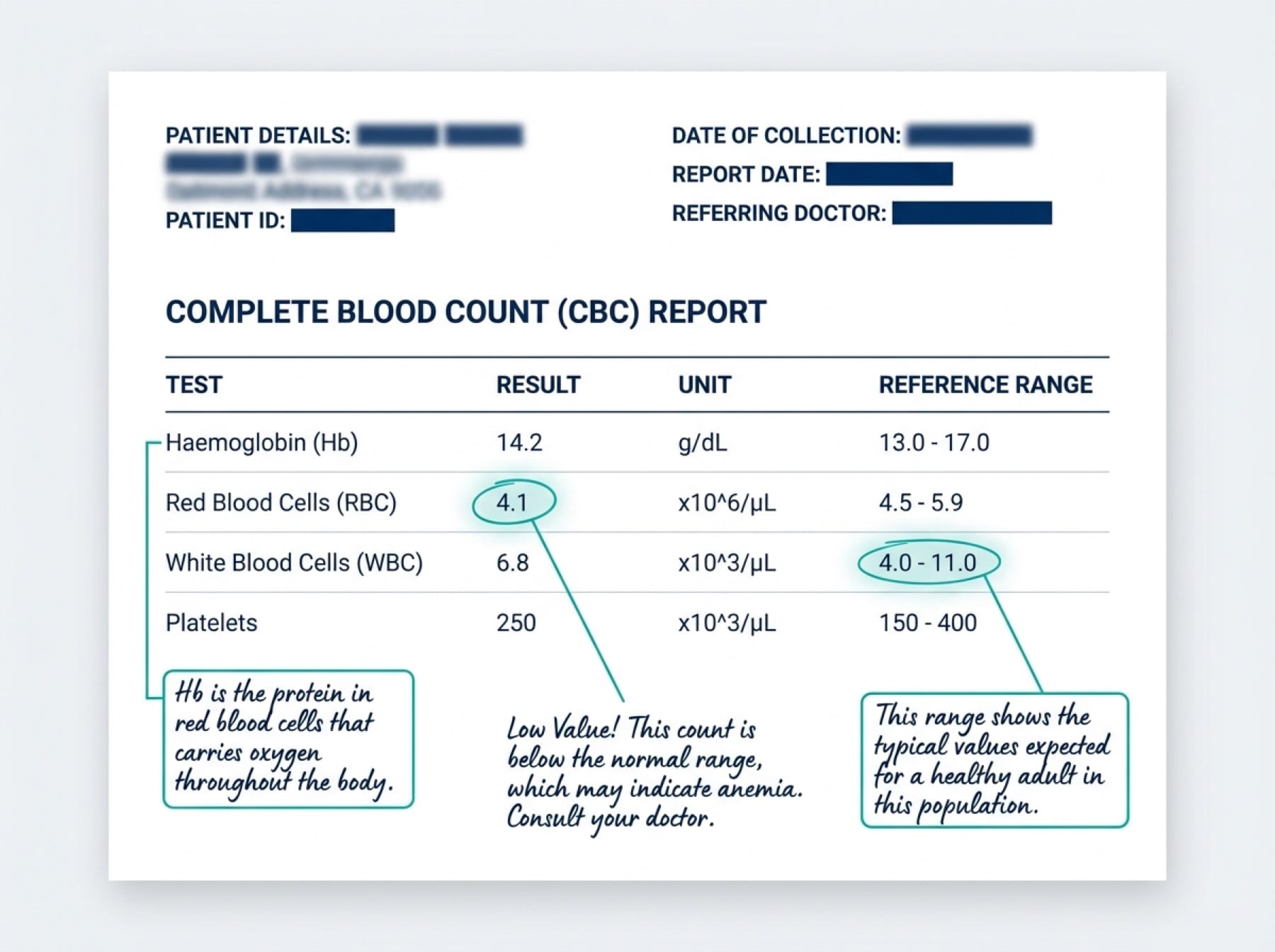
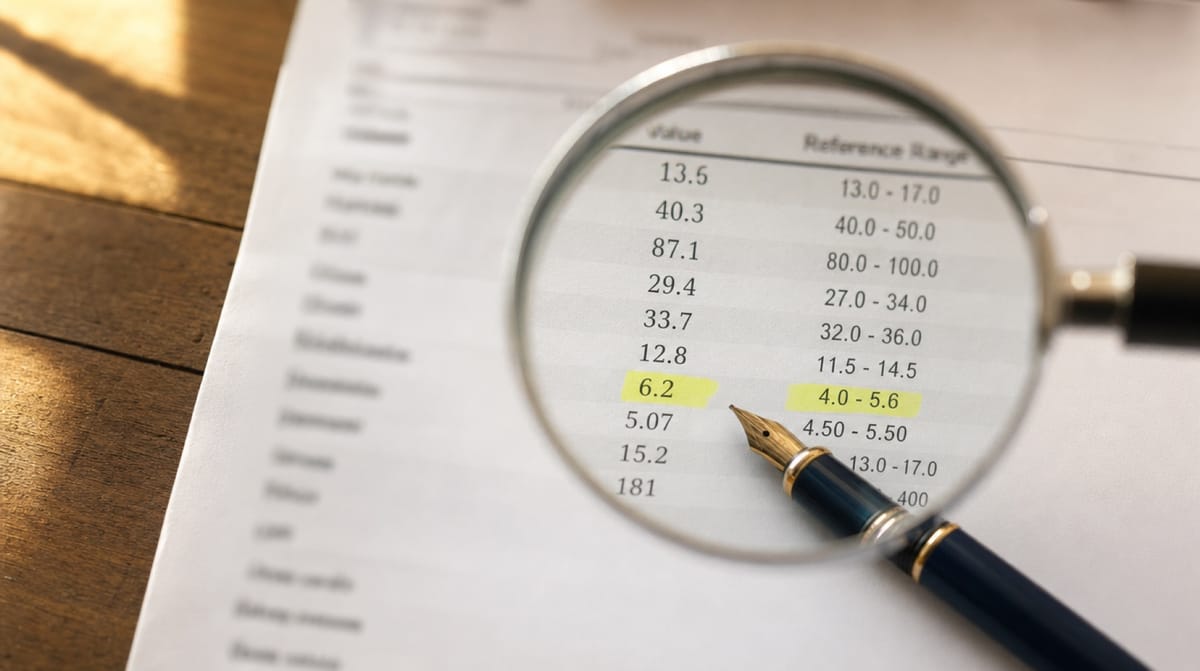
Annotated CBC report showing haemoglobin, a flagged low value, and normal reference range.
Haemoglobin (Hb or HGB) measures the oxygen-carrying protein in red blood cells and is the primary indicator of anaemia. A peer-reviewed study of 10,665 apparently healthy Indian adults across four cities (Sairam et al., Indian Journal of Clinical Biochemistry, 2014, PMC4062657) established 95% reference intervals for haemoglobin in Indian adults as 12.3 to 17.0 g/dL in men and 9.9 to 14.3 g/dL in women. For comparison, the WHO 2011 clinical thresholds for diagnosing anaemia are below 13.0 g/dL in adult men, below 12.0 g/dL in non-pregnant adult women, and below 11.0 g/dL in pregnant women. The difference between the WHO thresholds and the Indian reference intervals reflects genuine population-level variation in haemoglobin values. Indian labs frequently use values derived from local studies, which is why the range on your report may differ from international cutoffs you find online.
Low haemoglobin (anaemia) causes fatigue, breathlessness, reduced exercise capacity, and in severe cases, cardiac strain. In India, iron deficiency is the most common cause, followed by B12 and folate deficiency. High haemoglobin (above the upper reference limit) can indicate dehydration, lung disease, or in rare cases, a bone marrow condition called polycythaemia vera. Either extreme warrants a doctor's evaluation.
WBC (White Blood Cell count) reflects the activity of the immune system. Most Indian labs report a normal range of approximately 4,000 to 11,000 cells per microlitre (or 4.0 to 11.0 x 10^9/L). A count significantly above 11,000 generally indicates infection, inflammation, or in rare cases, a blood disorder. A count below 4,000 (leucopaenia) may suggest a viral infection, a medication effect, or occasionally a bone marrow issue. The WBC number on its own tells your doctor that something is happening. The differential count (the breakdown into neutrophils, lymphocytes, monocytes, eosinophils, and basophils) tells them more precisely what.
Platelet count measures the cells responsible for blood clotting. The Indian reference interval from Sairam et al. is 1.3 to 3.8 Lakhs/µL in men and 1.3 to 4.2 Lakhs/µL in women (equivalent to 130,000 to 380,000 or 420,000 per microlitre). Low platelets (thrombocytopaenia), particularly below 1.0 Lakh/µL, can increase bleeding risk and may be seen in dengue fever (a common cause of acute thrombocytopaenia in India), viral infections, or certain medications. Very high platelets may indicate infection, inflammation, or iron deficiency. A platelet count below 0.5 Lakh/µL (50,000) is clinically significant and should be evaluated urgently.
The remaining CBC parameters (MCV, MCH, MCHC, and RDW) are primarily tools your doctor uses to identify the type and cause of anaemia, not numbers you need to interpret independently. If your haemoglobin is normal, these numbers matter very little. If your haemoglobin is low, your doctor will use these to determine whether the anaemia is due to iron deficiency, B12/folate deficiency, or another cause.
Blood Glucose Tests
India has approximately 101 million people living with diabetes and a further 136 million who are pre-diabetic, the largest absolute burden of any country. Blood glucose tests are among the most important preventive tests for any Indian adult.
Fasting blood glucose is measured after a minimum of 8 hours without eating. The internationally adopted clinical cutoffs, used by the American Diabetes Association and aligned with RSSDI (Research Society for the Study of Diabetes in India) guidelines, are as follows. A value below 100 mg/dL is normal, 100 to 125 mg/dL indicates impaired fasting glucose (pre-diabetes), and 126 mg/dL or above on two separate tests confirms diabetes. If your fasting glucose is above 126 on a single test, it must be repeated on a different day before a diagnosis of diabetes is confirmed, unless you also have symptoms of hyperglycaemia.
Post-prandial (PP) blood glucose, measured two hours after the start of a meal, follows the same classification: below 140 mg/dL is normal, 140 to 199 mg/dL indicates post-prandial impairment (pre-diabetes), and 200 mg/dL or above on two separate occasions confirms diabetes. A two-hour value of 200 or above with symptoms of hyperglycaemia (excessive thirst, frequent urination, blurred vision) can confirm diabetes on a single test.
HbA1c (glycated haemoglobin) is different from a point-in-time glucose measurement. It reflects the average blood glucose level over the previous two to three months by measuring the proportion of haemoglobin that has glucose attached to it. An HbA1c below 5.7% is normal. 5.7% to 6.4% indicates pre-diabetes. 6.5% or above on two separate occasions confirms diabetes. HbA1c is particularly useful for monitoring diabetes control in already-diagnosed patients: a value below 7.0% is generally the treatment target, though this varies by individual and should be set by your doctor. Note that HbA1c can be unreliable in conditions affecting red blood cell lifespan, including haemolytic anaemia, iron deficiency anaemia, sickle cell disease, and certain haemoglobin variants more common in Indian populations. If your doctor suspects any of these conditions, they may rely more on fasting or post-prandial glucose values.
The Lipid Profile
A lipid profile measures the fats circulating in your blood and is the key screening test for cardiovascular disease risk. It is usually reported as four or five numbers: total cholesterol, LDL, HDL, triglycerides, and sometimes non-HDL cholesterol or VLDL. The clinical cutoffs below are from the NCEP ATP III guidelines (National Cholesterol Education Program Adult Treatment Panel III), which are the standard reference used in Indian cardiology and general medicine practice.
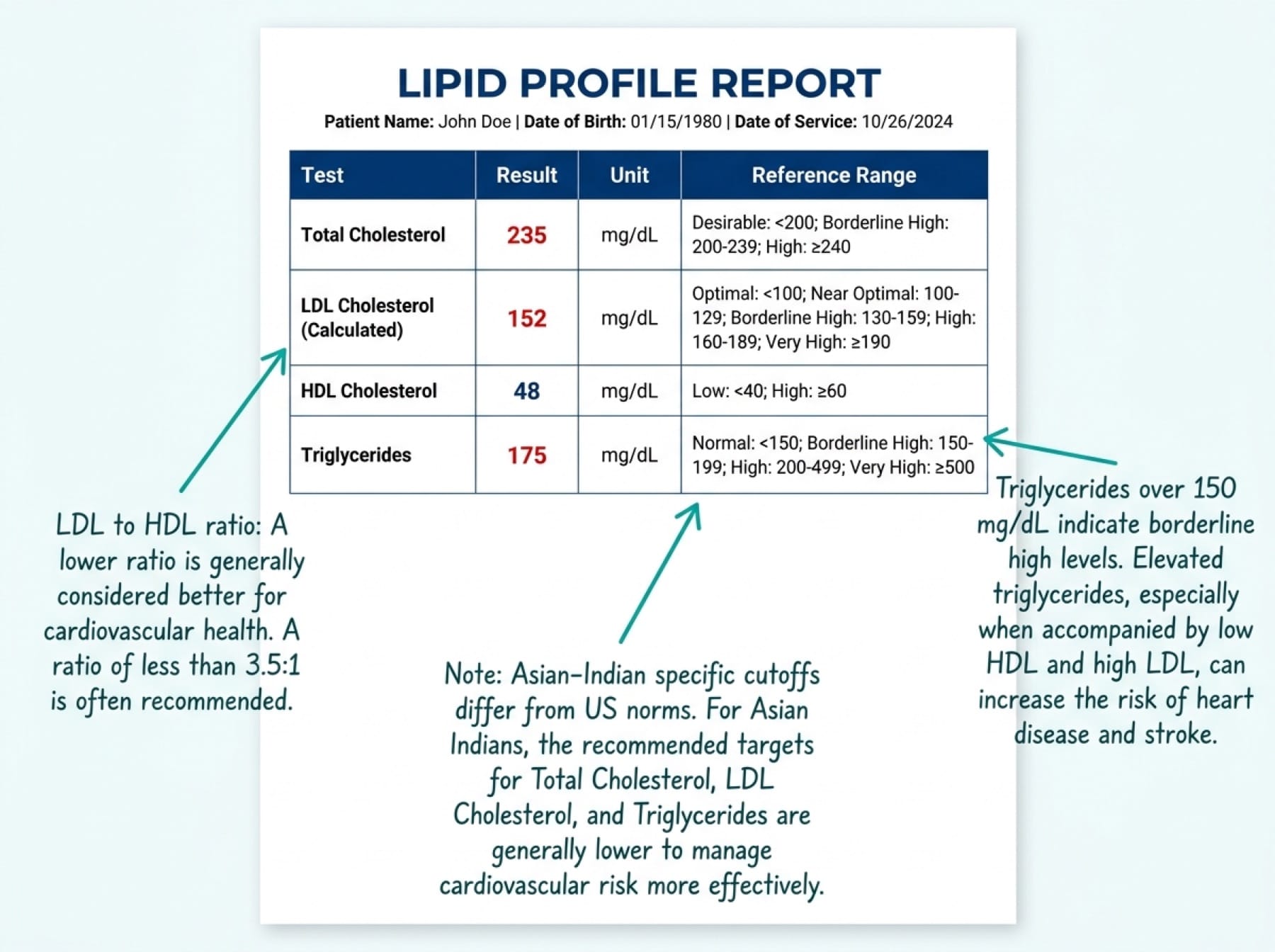
Annotated lipid profile explaining the LDL-HDL ratio and India-specific cholesterol cutoffs.
Total cholesterol is a combined measure of all cholesterol types. A value below 200 mg/dL is desirable. 200 to 239 mg/dL is borderline high. 240 mg/dL or above is high and associated with elevated cardiovascular risk. Total cholesterol alone is an incomplete risk indicator because it includes HDL (the "good" cholesterol). A person with high HDL may have a high total cholesterol but lower net risk than someone with the same total cholesterol but low HDL.
LDL (Low Density Lipoprotein) is the cholesterol fraction most directly associated with arterial plaque formation and cardiovascular risk. Optimal LDL is below 100 mg/dL. Near-optimal is 100 to 129. Borderline high is 130 to 159. High is 160 to 189. Very high, and associated with substantially elevated risk, is 190 mg/dL or above. For patients with diabetes, established heart disease, or prior stroke, the target LDL is often below 70 mg/dL. Your doctor will advise the appropriate target for your specific situation.
HDL (High Density Lipoprotein) is often called "good cholesterol" because it transports cholesterol away from arterial walls. Unlike LDL, high HDL is desirable. An HDL below 40 mg/dL in men or below 50 mg/dL in women is low and associated with increased cardiovascular risk. An HDL of 60 mg/dL or above is considered protective. In Indian populations, particularly with metabolic syndrome or type 2 diabetes, low HDL combined with high triglycerides is an extremely common and specifically concerning pattern.
Triglycerides are fats derived primarily from dietary intake and liver synthesis. A level below 150 mg/dL is normal. 150 to 199 mg/dL is borderline high. 200 to 499 mg/dL is high. 500 mg/dL or above is very high and carries a risk of pancreatitis. Triglycerides are highly sensitive to recent dietary intake, alcohol consumption, and physical inactivity. An isolated high triglyceride value in someone who ate a heavy or oily meal the night before a fasting test, or who consumed alcohol within 24 hours, may not reflect their true fasting level. Accurate triglyceride measurement requires a strict 12-hour fast and abstinence from alcohol for 24 to 48 hours beforehand.
Non-HDL cholesterol (Total cholesterol minus HDL) is increasingly used as a risk marker because it captures LDL, VLDL, and other atherogenic lipoproteins. A desirable non-HDL cholesterol is below 130 mg/dL. If your report includes this number and it is elevated even when LDL appears borderline, discuss it with your doctor. Indian patients with the thin-fat phenotype and metabolic syndrome often have particularly high non-HDL and triglycerides even with apparently normal LDL.
Liver Function Tests (LFT)
The liver function test panel measures multiple enzymes and proteins that indicate how well the liver is working. The most clinically important for a patient reading their own report are ALT and AST.
ALT (Alanine Aminotransferase, also called SGPT) is a liver-specific enzyme. Elevated ALT is one of the most reliable indicators of liver cell damage. Most Indian labs report a normal range of approximately 7 to 56 U/L in men and 7 to 45 U/L in women. A mildly elevated ALT (up to 2 to 3 times the upper limit) is common with fatty liver disease, which has very high prevalence in India, alcohol consumption, certain medications (including common painkillers like paracetamol and antibiotics), and even vigorous exercise. A severely elevated ALT (above 10 times the upper limit) indicates significant liver injury and requires urgent evaluation.
AST (Aspartate Aminotransferase, also called SGOT) is found in the liver but also in heart muscle and skeletal muscle. Elevated AST alongside elevated ALT suggests liver disease. Elevated AST with normal ALT may indicate cardiac muscle involvement or skeletal muscle injury. Most labs report a normal range of 10 to 40 U/L in men and 9 to 32 U/L in women.
Bilirubin is a yellow pigment produced when haemoglobin breaks down. Total bilirubin above 1.2 mg/dL may indicate liver disease, bile duct obstruction, or haemolytic anaemia. Jaundice (yellowing of the skin and eyes) becomes visible when total bilirubin exceeds approximately 3 mg/dL. Mildly elevated unconjugated bilirubin in an otherwise normal liver panel, particularly in young men, often indicates Gilbert's syndrome, a benign hereditary condition present in approximately 5% of Indians that causes intermittent mild bilirubin elevation but requires no treatment.
Kidney Function Tests (KFT)
Kidney function is assessed primarily through two parameters: creatinine and blood urea nitrogen (BUN/blood urea), with creatinine being the more reliable indicator.
Creatinine is a waste product from muscle metabolism that the kidneys filter out of the blood. The standard reference range for most Indian labs is approximately 0.7 to 1.2 mg/dL in men and 0.5 to 1.0 mg/dL in women. Creatinine must always be interpreted in the context of body size and muscle mass. A very muscular man may have a creatinine of 1.3 mg/dL with perfectly normal kidneys, while a thin elderly woman with a creatinine of 1.1 mg/dL may have significantly impaired kidney function. This is why the eGFR (estimated Glomerular Filtration Rate) is increasingly the primary clinical number rather than creatinine alone.
eGFR (estimated Glomerular Filtration Rate) is a calculation based on creatinine, age, and sex that estimates how much blood your kidneys filter per minute. An eGFR above 90 mL/min/1.73m² is normal. 60 to 89 suggests mild reduction. 30 to 59 suggests moderate kidney disease. Below 30 indicates severe impairment. Many labs now automatically calculate and report eGFR alongside creatinine. This number is far more clinically useful for a patient than creatinine alone, and if your report includes it, this is the one to discuss with your doctor.
Blood urea nitrogen (BUN) or Blood Urea measures urea, another waste product the kidneys clear. Normal blood urea is approximately 15 to 40 mg/dL (or 7 to 20 mg/dL for BUN, as labs may report either value or both). High blood urea with high creatinine suggests kidney impairment. High blood urea with normal creatinine may indicate dehydration, high protein diet, or gastrointestinal bleeding. Urea is less specific than creatinine and should be read alongside it.
Thyroid Function Test (TSH)
The TSH (Thyroid Stimulating Hormone) test is the single most useful screening test for thyroid dysfunction. It is released by the pituitary gland to stimulate the thyroid. When the thyroid underperforms, TSH rises (hypothyroidism). When the thyroid overperforms, TSH falls (hyperthyroidism).
Most Indian labs and international guidelines use a TSH reference range of approximately 0.4 to 4.0 mIU/L, though some labs report 0.45 to 4.5 mIU/L. The reference range on your specific report is the one to use. India has a high prevalence of hypothyroidism, particularly in women and in iodine-deficient geographic regions. A TSH above 4.0 mIU/L (or your lab's upper limit) with symptoms such as fatigue, weight gain, cold intolerance, hair loss, or constipation warrants further evaluation including T4 (free T4) measurement. A TSH below the lower limit with symptoms of palpitations, weight loss, heat intolerance, or anxiety suggests hyperthyroidism and also requires follow-up testing.
A mildly elevated TSH (4.0 to 10.0 mIU/L) without symptoms is called subclinical hypothyroidism. Whether to treat subclinical hypothyroidism is a decision made individually by your doctor based on your symptoms, antibody status, age, and whether you are pregnant or planning pregnancy.
What to Do With Your Results: A Practical Framework
Three categories of results require different responses.
Results within the reference range on your report, for a test done in appropriate conditions (correct fasting duration, no recent illness), generally do not require any action beyond sharing with your doctor at your next scheduled appointment. A result within range does not mean there is no issue. It means that value is within the normal statistical distribution for the population your lab calibrated on. Your doctor interprets it in the context of your history, symptoms, and other results.
Results outside the reference range that are not flagged as critical values require discussion with your doctor at your next appointment or sooner if you have symptoms. "Outside range" is not an emergency by default. A haemoglobin of 11.5 g/dL in a woman who is asymptomatic and menstruating warrants investigation, not panic. An LDL of 145 mg/dL requires a dietary and lifestyle conversation, not an immediate hospital visit.
Results flagged as "critical" or "panic values" by the laboratory (which labs are required to phone through to the ordering clinician) and results accompanied by symptoms such as chest pain, severe breathlessness, active bleeding, or altered consciousness require immediate medical attention. Call your doctor immediately or go to an emergency department.
For a comprehensive guide on which blood tests Indian adults should include in their annual health evaluation, see our guide to annual health tests.
The Most Common Reading Mistakes Indian Patients Make
Comparing values to a different lab's ranges or to values found through an online search is the most frequent source of unnecessary anxiety. Every lab uses its own calibrated reference intervals, and online "normal ranges" may come from Western populations or different instruments. Your lab's printed range is the right reference.
Treating a single abnormal result as a diagnosis ignores the fact that blood test results fluctuate day to day, are sensitive to collection conditions, and require clinical interpretation. A single elevated fasting glucose does not diagnose diabetes. A single low haemoglobin does not identify its cause. A single elevated AST after a heavy gym session is not liver disease.
Ignoring a consistently elevated result because it feels minor is the opposite error. An HbA1c of 6.2% reported for the second time in 12 months is pre-diabetes progressing toward diabetes, and that trend matters regardless of how well the person feels. Trends across serial reports, not single readings, are often what most concern clinicians.
Assuming that all numbers in the "normal" range mean perfect health misunderstands what reference ranges are. An LDL of 128 mg/dL is "near-optimal" per NCEP categories but is not the same as an LDL of 80 mg/dL in terms of cardiovascular risk. Values within range exist on a spectrum, and where on that spectrum you land matters in the context of your overall risk profile.
The Bottom Line
Understanding your blood report is not about replacing your doctor. It is about showing up to the appointment having already read the document, understood the general direction of your results, and prepared a meaningful question instead of asking what the numbers mean from scratch. A patient who understands that their HbA1c has risen from 5.8% to 6.3% over two reports is a patient who can have a specific conversation about diet, exercise, and follow-up timelines. A patient who understands that their LDL is 160 mg/dL can ask whether lifestyle modification is sufficient or whether medication is being considered.
The tests in this guide cover the most commonly ordered blood panels in Indian clinical practice. They use clinical thresholds from the WHO, ADA, and NCEP (the internationally adopted standards that Indian clinicians work from) and India-specific reference intervals from published peer-reviewed research where available. No number in this guide replaces the printed reference range on your specific report, and no combination of numbers in this guide substitutes for the clinical judgement of a qualified doctor who knows your complete history.
Action This Week
Pick one. Pull out your most recent blood report and find five values: haemoglobin, fasting glucose, HbA1c, LDL, and TSH. Compare each against the reference range printed on your own report (not online). If any value is outside your lab's range and you have not discussed it with your doctor, book a consultation this week. If your most recent blood report is more than 12 months old and you are over 30, see the companion annual health tests guide and book the appropriate panel.
Stay informed on preventive health and clinical education in India
SwasthiQ covers India-specific clinical evidence and patient education for healthcare consumers and clinic owners. Subscribe to our monthly newsletter: evidence-based, no wellness-industry hype.
Think Care · Think SwasthiQ
Related reading: Important annual medical tests every adult in India should know | Why Indian women are having heart attacks younger than ever | Magnesium deficiency: the silent nutritional gap in Indian diets